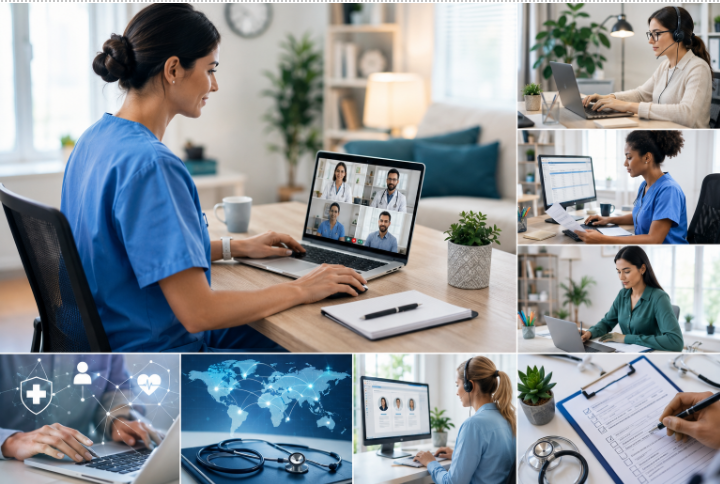
How Does Per Diem Nursing Work in Healthcare

Nurse using tablet in hospital

If you have been exploring flexible nursing career options, you have likely come across the term “per diem.” But how does per diem nursing work, exactly, and is it the right fit for your career? This guide breaks down everything healthcare professionals need to know about per diem work, from how shifts are scheduled to how it compares to traditional employment.

What Does “Per Diem” Mean in Healthcare?

The term “per diem” is Latin for “per day” or “by the day.” In the context of healthcare staffing, per diem employees in healthcare are workers who are available to work shifts on an as-needed basis, rather than being employed on a fixed full-time or part-time schedule. Healthcare facilities rely on per diem employees in healthcare to fill gaps caused by staff absences, unexpected surges in patient volume, or temporary vacancies.

Unlike permanent employees, per diem staff typically do not have guaranteed hours each week. Instead, they receive shift offers often on short notice and choose whether to accept them based on their availability and preferences.

How Does Per Diem Nursing Work: A Step-by-Step Overview

Step 1: Onboarding and Credentialing

Before you can begin working per diem, you must complete the onboarding process with either a healthcare facility or a staffing agency. This typically involves submitting your nursing license, certifications (such as BLS, ACLS, or specialty credentials), employment history, and background check documentation. Once cleared, you are added to the facility’s or agency’s available roster.

Step 2: Shift Offers and Scheduling

Once onboarded, you will receive shift offers via phone call, text, app notification, or scheduling software. Facilities post open shifts often days in advance but sometimes with just a few hours’ notice and per diem nurses either accept or decline based on their availability. This is one of the defining aspects of how per diem nursing works: you are in control of your schedule.

Step 3: Working the Shift

When you accept a per diem shift, you arrive at the assigned facility, complete a brief orientation if it is a new site, and integrate into the existing care team for that shift. Per diem nurses are expected to be clinically competent and able to perform independently without the extended orientation period given to permanent hires.

Step 4: Documentation and Pay

After completing your shift, you submit your hours through the facility’s timekeeping system or the staffing agency’s platform. Per diem employees in healthcare are typically paid a higher hourly rate than staff nurses in exchange for the lack of benefits and schedule guarantee. Pay cycles vary by employer or agency.

Who Uses Per Diem Employees in Healthcare?

Per diem employees in healthcare are utilized across virtually every care setting, including:

  • Hospitals and acute care facilities
  • Long-term care and skilled nursing facilities
  • Home health agencies
  • Outpatient clinics and surgical centers
  • Rehabilitation centers
  • School nursing programs

Facilities rely on per diem nursing staff to maintain safe patient-to-nurse ratios during high-census periods, avoid costly agency premiums associated with last-minute external staffing, and reduce burnout among permanent employees by covering unexpected absences.

Advantages of Per Diem Nursing

Flexible Scheduling

Understanding how per diem nursing works starts with recognizing the freedom it provides. You choose when to work and when to take time off a major advantage for nurses who are parents, students, or managing other personal obligations.

Higher Hourly Pay

Per diem nurses typically earn a higher base hourly rate than their full-time counterparts. Because they do not receive employer-sponsored benefits such as health insurance, retirement contributions, or paid time off, the compensation difference is built into the hourly rate to reflect that trade-off.

Diverse Clinical Experience

Working at multiple facilities exposes per diem nurses to a wider range of patient populations, acuity levels, electronic health record systems, and team dynamics. This breadth of experience is a tremendous professional asset and helps build a highly versatile skill set.

Reduced Workplace Politics

Because per diem employees in healthcare are not tied to a single facility’s internal culture or politics, many nurses find per diem work less stressful from an interpersonal standpoint. You show up, care for patients, and leave without being embedded in departmental dynamics.

Challenges of Per Diem Nursing

Lack of Benefits

Most per diem employees in healthcare do not receive employer-sponsored health insurance, dental or vision coverage, paid sick leave, or retirement matching. Nurses in per diem roles must budget for and independently obtain these protections, which can be a significant cost consideration.

Variable Income

Since per diem work offers no guaranteed hours, your weekly income can fluctuate considerably. During low-census periods or holiday weeks, shift offers may decrease. Successful per diem nurses often work with multiple facilities or through a staffing agency to maintain a consistent volume of shifts.

Orientation Requirements

Each new facility you work at may require you to complete a facility-specific orientation, review policies, and pass competency assessments before you can work independently. Managing multiple orientations can be time-consuming, especially when starting with new sites.

Per Diem Nursing vs. Travel Nursing: What’s the Difference?

Both per diem and travel nursing offer flexibility, but they work differently. Travel nursing involves accepting a formal contract (typically 13 weeks) at a single facility, often in a different city or state, with housing stipends and comprehensive benefits packages. Per diem nursing, on the other hand, involves day-by-day shift work with no contract commitment, usually closer to home.

If you are asking how does per diem nursing work compared to travel nursing, think of per diem as maximum flexibility with local roots, while travel nursing provides structured assignments with relocation and higher all-in compensation packages.

How to Find Per Diem Nursing Work

There are two primary pathways for finding per diem nursing opportunities:

Direct Facility Employment

Many hospitals and healthcare facilities hire per diem employees directly and maintain their own internal float pools. You apply through the facility’s HR department, complete their onboarding, and receive shift offers through their internal scheduling system. This model works well if you want to specialize within a single system.

Healthcare Staffing Agencies

Partnering with a healthcare staffing agency is often the most efficient way to maximize your per diem opportunities. Staffing agencies maintain relationships with multiple facilities, handle credentialing and compliance paperwork, and actively match your skills and availability to available shifts. This approach gives you broader access to shifts and simplifies the administrative burden of working across multiple sites.

When evaluating a staffing agency, look for one with a strong local and national network, transparent pay rates, responsive recruiter support, and a track record of placing per diem employees in healthcare successfully across a variety of settings.

Is Per Diem Nursing Right for You?

Per diem nursing is an excellent career option for nurses who value scheduling flexibility, want to supplement their income, are in nursing school and need a non-fixed schedule, or are transitioning between full-time positions. It is also a smart choice for recently retired nurses who want to stay clinically active on their own terms.

However, if financial predictability and comprehensive benefits are a priority, a full-time or contract position may be a better fit until you build up your per diem client base across multiple facilities.

Final Thoughts on How Per Diem Nursing Works

So, how does per diem nursing work in practice? It is a staffing model built on flexibility for both the healthcare facility and the nurse. Per diem employees in healthcare fill critical gaps in patient care while retaining full control over their schedules and, in many cases, earning premium hourly compensation.

Whether you are a nurse exploring flexible career options or a healthcare facility seeking reliable on-call coverage, per diem nursing offers a practical and mutually beneficial solution.

Ready to explore per diem opportunities? EmpowerCare connects qualified nurses with leading healthcare facilities across the country. Contact us today to get started.

Frequently Asked Questions

  1. What are per diem employees in healthcare?
    Per diem employees in healthcare work on an as-needed basis, picking shifts instead of following a fixed schedule.
  2. How do per diem employees in healthcare get shifts?
    They receive shift offers from hospitals or agencies and can accept or decline based on availability.
  3. Do per diem healthcare workers earn higher pay?
    Yes, they usually earn higher hourly wages since they do not receive full-time benefits.
  4. What are the benefits of per diem roles in healthcare?
    They offer flexible schedules, diverse work experience, and control over workload.
  5. Where can I find per diem healthcare jobs?
    You can apply directly to healthcare facilities or work with staffing agencies like EmpowerCare.

Healthcare Support Staffing Agency Worcester MA

Healthcare team walking together

Finding the right healthcare talent or the right healthcare job in Worcester, MA requires a staffing partner who truly understands both the local market and the demands of the healthcare industry. Whether you are a healthcare facility struggling with staffing shortages or a healthcare professional seeking your next opportunity, working with a dedicated healthcare support staffing agency can make all the difference.

Why Worcester MA Needs Specialized Healthcare Staffing

Worcester is the second-largest city in Massachusetts and home to a robust network of hospitals, clinics, long-term care facilities, and specialty practices. With UMass Memorial Medical Center, Saint Vincent Hospital, and dozens of other healthcare providers operating in the region, demand for qualified healthcare workers is consistently high.

Generic employment agencies in Worcester MA often lack the industry-specific expertise needed to accurately vet clinical staff, understand licensing requirements, and match candidates to the right care settings. A specialized healthcare support staffing agency bridges that gap with focused recruitment, compliance support, and deep knowledge of the healthcare workforce landscape.

What Is a Healthcare Support Staffing Agency?

A healthcare support staffing agency is a specialized workforce solutions firm that connects healthcare organizations with qualified medical and support staff. Unlike general employment agencies, a healthcare-focused staffing agency understands the clinical, regulatory, and operational nuances of placing nurses, allied health professionals, medical assistants, home health aides, and other caregivers.

For facilities in Worcester, partnering with a staffing agency Worcester professionals trust means faster placements, reduced overtime burden on existing staff, and confidence that every candidate is properly credentialed and background-checked.

Services Offered by a Healthcare Staffing Agency in Worcester MA

Per Diem Staffing

Per diem staffing allows healthcare facilities to call in qualified staff on short notice to fill last-minute shift gaps. This is ideal for managing unexpected absences, seasonal demand spikes, and fluctuating patient census. A reliable healthcare support staffing agency maintains a pre-vetted roster of per diem professionals ready to step in at any time.

Contract and Travel Staffing

Short-term contracts and travel nursing assignments help Worcester healthcare facilities manage longer-term vacancies without committing to permanent hires. Contract staff from a trusted staffing agency worcester can cover weeks or months of need while you conduct a full-time search or await a licensing transfer.

Permanent Placement

For organizations looking to grow their permanent workforce, a healthcare support staffing agency can handle candidate sourcing, screening, skills assessment, and reference verification saving your HR team significant time and resources.

Allied Health and Support Staff Placement

Beyond nursing, employment agencies in Worcester MA that specialize in healthcare can also source physical therapists, occupational therapists, medical coders, phlebotomists, certified nursing assistants (CNAs), and administrative healthcare staff.

Benefits of Working with a Healthcare Support Staffing Agency in Worcester

For Healthcare Facilities

  • Faster time-to-fill for open positions, reducing operational disruption
  • Access to a pre-screened, credentialed candidate pool ready to work
  • Compliance support including licensure verification, background checks, and onboarding documentation
  • Flexible staffing models including per diem, contract, and permanent placement
  • Reduced recruitment costs compared to internal hiring processes

For Healthcare Professionals

  • Access to top healthcare employers and facilities in Worcester MA and across Massachusetts
  • Dedicated recruiter support to match your skills and preferences to the right roles
  • Flexible scheduling options including per diem, contract, and permanent positions
  • Competitive pay rates and benefits packages
  • Opportunity to grow your clinical experience across diverse settings

Why EmpowerCare Is a Trusted Healthcare Support Staffing Agency in Worcester MA

EmpowerCare is a healthcare support staffing agency dedicated to connecting skilled healthcare professionals with top-tier facilities across Massachusetts, including Worcester and the surrounding communities. As one of the most trusted employment agencies in Worcester MA for healthcare talent, EmpowerCare combines local market expertise with a national network of credentialed clinicians.

Our team works closely with healthcare facilities to understand their specific staffing needs and culture and equally closely with healthcare professionals to understand their career goals and preferred work environments. This dual commitment is what sets us apart from general staffing agency worcester options.

Our Placement Process

EmpowerCare’s streamlined placement process is designed to reduce time-to-fill without compromising quality:

  • Initial consultation to understand facility or candidate needs
  • Candidate sourcing from our pre-vetted talent pool and active recruitment channels
  • Thorough screening including skills assessment, reference checks, and background verification
  • Credential and license verification to ensure full compliance
  • Match and placement with ongoing post-placement support

Healthcare Roles We Staff in Worcester MA

As a full-service healthcare support staffing agency, EmpowerCare places professionals across a wide range of clinical and non-clinical roles, including:

  • Registered Nurses (RN) and Licensed Practical Nurses (LPN)
  • Certified Nursing Assistants (CNA) and Patient Care Technicians
  • Allied Health Professionals (PT, OT, SLP, Radiology, Lab)
  • Home Health Aides and Personal Care Attendants
  • Medical Assistants and Administrative Support Staff
  • Per Diem, Travel, and Permanent Healthcare Staff

Get Started with EmpowerCare Today

Whether you are a Worcester healthcare facility looking for reliable staffing solutions or a healthcare professional ready to explore new opportunities, EmpowerCare is the healthcare support staffing agency you can count on.

Contact us today to learn more about how our staffing agency Worcester Services can help you meet your workforce goals efficiently, compliantly, and with the care your patients deserve.

Frequently Asked Questions

  1. What does a healthcare support staffing agency do?
    A healthcare support staffing agency connects healthcare facilities with qualified medical and support staff for temporary or permanent roles.
  2. Why choose a healthcare staffing agency in Worcester MA?
    It helps healthcare facilities fill positions faster with pre-screened, licensed professionals and reduces hiring stress.
  3. What types of jobs are offered through staffing agencies?
    Jobs include nursing roles, allied health positions, medical assistants, CNAs, and administrative healthcare jobs.
  4. What is per diem healthcare staffing?
    Per diem staffing allows facilities to hire professionals on a short-term or as-needed basis for shift coverage.
  5. How can healthcare professionals find jobs in Worcester MA?
    They can connect with staffing agencies like EmpowerCare for flexible, well-matched job opportunities.

A Complete Guide to Emergency Room Nursing

Emergency room nurse care

Whether you are just starting your healthcare career or considering a specialty shift, becoming an emergency room nurse is one of the most challenging and rewarding paths in the profession. This complete guide to emergency room nursing covers everything you need to know, from daily responsibilities and required skills to career outlook and how to find the right opportunities.

What Is an Emergency Room Nurse?

An emergency room nurse, commonly known as an ER nurse, is a registered nurse who specializes in providing immediate care to patients experiencing acute illnesses, traumatic injuries, or life-threatening conditions. Unlike nurses in other settings, an ER nurse must be prepared to treat a wide range of patients from a child with a high fever to an adult in cardiac arrest often at the same time.

Emergency nursing is a dynamic, fast-paced specialty that demands exceptional clinical skills, quick decision-making, and the ability to remain composed under pressure. Every shift is different, which is part of what makes it such a fulfilling career choice for many healthcare professionals.

Core Responsibilities of an Emergency Room Nurse

The day-to-day role of an emergency room nurse encompasses a wide spectrum of clinical and patient care duties. Here is a breakdown of what ER nurses typically do:

  • Triage patients upon arrival and assess the severity of their condition
  • Administer medications, IV fluids, and treatments as directed by physicians
  • Monitor vital signs and patient status continuously
  • Assist with emergency procedures such as intubation, wound care, and resuscitation
  • Coordinate care between physicians, specialists, and support staff
  • Document patient information accurately in the electronic health record (EHR)
  • Communicate diagnoses, updates, and discharge instructions to patients and families
  • Maintain readiness and stock emergency supplies and crash carts

Emergency nursing requires professionals who can shift priorities rapidly as new patients arrive and conditions change. The ability to multitask while staying focused on individual patient safety is a defining trait of a successful ER nurse.

Education and Licensing Requirements

Degree Requirements

To become an emergency room nurse, you must first obtain either an Associate Degree in Nursing (ADN) or a Bachelor of Science in Nursing (BSN). While both degrees qualify you to sit for the NCLEX-RN licensing exam, many hospitals and emergency departments prefer or require a BSN due to the complexity of care involved in emergency nursing.

Licensure

After completing your nursing degree, you must pass the NCLEX-RN examination to become a licensed registered nurse (RN). This is a mandatory step before you can practice as an ER nurse in any state.

Certifications for ER Nurses

While not always required for entry-level positions, earning specialty certifications significantly enhances your credibility and career prospects in emergency nursing. Key certifications include:

  • CEN (Certified Emergency Nurse) – The gold standard credential for ER nurses, offered by the Board of Certification for Emergency Nursing (BCEN)
  • ACLS (Advanced Cardiovascular Life Support) – Essential for managing cardiac emergencies
  • PALS (Pediatric Advanced Life Support) – Required for facilities treating pediatric patients
  • TNCC (Trauma Nursing Core Course) – Provides training for trauma care scenarios
  • BLS (Basic Life Support) – A baseline requirement for nearly all nursing positions

Skills Every ER Nurse Must Have

Emergency nursing demands a unique combination of technical expertise and interpersonal abilities. The most effective ER nurses demonstrate the following skills:

Clinical Proficiency

Emergency room nurses must be highly skilled in procedures such as IV insertion, wound management, catheterization, airway management, and cardiac monitoring. Confidence in clinical tasks is built through hands-on experience and continuous education.

Critical Thinking

An ER nurse encounters unpredictable situations constantly. Strong critical thinking skills allow them to analyze symptoms, anticipate complications, and act decisively when every second counts.

Communication

Clear and compassionate communication with patients, families, and the healthcare team is essential in emergency nursing. ER nurses serve as a bridge between frightened patients and complex medical information.

Stress Management and Resilience

Emergency nursing is emotionally and physically demanding. Successful ER nurses develop healthy coping mechanisms, lean on their team, and maintain emotional resilience to sustain long, intense careers.

Adaptability

No two shifts are alike in the ER. The ability to adjust quickly to changing patient loads, trauma scenarios, and evolving protocols is crucial for every emergency room nurse.

Work Environment and Shift Structure

Emergency room nurses typically work in hospital emergency departments, urgent care centers, freestanding ERs, or trauma centers. Most ER nurses work 12-hour shifts in a rotating schedule that may include nights, weekends, and holidays.

The physical demands of emergency nursing are significant ER nurses are on their feet throughout most shifts, frequently lifting or repositioning patients, and operating in high-sensory environments. Despite these demands, many ER nurses find the environment energizing and deeply purposeful.

Career Growth and Salary Expectations

Average Salary

The salary for an emergency room nurse varies depending on experience, location, and employer. According to the Bureau of Labor Statistics, registered nurses in the United States earn a median annual salary of over $80,000, with experienced ER nurses and travel nurses often earning significantly more. Specialized certifications like the CEN can further boost earning potential.

Career Advancement

Emergency nursing opens the door to numerous career advancement opportunities, including:

  • Charge Nurse or Nurse Manager roles within the ED
  • Trauma Coordinator or Flight Nurse positions
  • Nurse Practitioner or Clinical Nurse Specialist with an ER focus
  • Travel ER nurse roles that offer higher pay and flexibility
  • Education and training positions in emergency nursing programs

Travel and Per Diem ER Nursing

For emergency room nurses who crave variety and flexibility, travel nursing and per diem roles offer exciting alternatives to traditional full-time employment. Travel ER nurses take short-term assignments at hospitals across the country, earning competitive pay packages that often include housing stipends, health benefits, and travel allowances.

Per diem ER nurses, on the other hand, work on an as-needed basis for one or more healthcare facilities. This model offers maximum schedule flexibility and suits those who prefer to control their own workload. Both options allow skilled ER nurses to broaden their clinical experience while potentially increasing their income.

How to Find ER Nursing Jobs

Finding the right emergency room nurse position starts with knowing where to look. Here are the most effective strategies:

  • Partner with a healthcare staffing agency that specializes in emergency nursing placements. They offer access to exclusive job opportunities and handle the negotiation process on your behalf
  • Use professional networks such as the Emergency Nurses Association (ENA) and platforms like LinkedIn to connect with hiring managers
  • Apply directly to hospital systems with high-volume ERs and Level I or Level II trauma centers for the most challenging and rewarding experiences
  • Consider travel nursing contracts as a stepping stone to explore different hospitals, regions, and patient populations

Is Emergency Room Nursing Right for You?

Emergency nursing is not a career path for everyone, but for those who thrive in high-pressure environments, enjoy variety, and are driven by the ability to make an immediate difference in someone’s life, it can be deeply fulfilling. If you are compassionate, resilient, technically skilled, and genuinely energized by the unexpected, a career as an ER nurse may be exactly the right fit.

Final Thoughts

Emergency room nursing is one of the most respected and essential specialties in healthcare. Whether you are a new graduate eager to enter the field or an experienced nurse looking for a new challenge, emergency nursing offers unmatched career variety, purpose, and growth. With the right preparation, certifications, and support from a trusted staffing partner, you can build a successful and rewarding career as an emergency room nurse.

Ready to take the next step? EmpowerCare connects skilled ER nurses with top healthcare facilities across the country. Explore our current openings today.

Frequently Asked Questions

  1. What does an emergency room nurse do?
    An emergency room nurse provides immediate care to patients with injuries, illnesses, or life-threatening conditions in fast-paced hospital environments.
  2. What qualifications are needed to become an ER nurse?
    You need an ADN or BSN degree, pass the NCLEX-RN exam, and hold a valid RN license. Certifications like ACLS or CEN are also beneficial.
  3. Is emergency room nursing stressful?
    Yes, it is a high-pressure role, but it is also highly rewarding for those who can handle fast decision-making and critical situations.
  4. What skills are important for an emergency room nurse?
    Key skills include clinical expertise, critical thinking, communication, adaptability, and stress management.
  5. How can I find emergency room nurse jobs?
    You can apply through hospital websites, professional networks, or healthcare staffing agencies like EmpowerCare.

Not All Travel Assignments Are Equal: How to Choose the Right Opportunity with Confidence

Travel nurse jobs

When you are working on travel assignments, you are wondering whether you are choosing the right option for building a strong career. What used to be a niche career path is now a powerful, flexible option for professionals who want more, more experience, more freedom, and more control over where and how they work. From cross-country travel nursing to specialized roles like travel nurse practitioner jobs and travel nursing assistant jobs, opportunities are everywhere. But here’s the catch: not all assignments are created equal. Some will elevate your career, expand your skills, and leave you feeling fulfilled. Others? They might look great on paper but fall short in reality. So how do you tell the difference? And more importantly, how do you choose the right opportunity with confidence?

The Illusion of “Good on Paper”

It’s easy to get drawn in by the obvious factors, such as competitive pay, attractive locations, or quick placements. And while those things matter, they don’t tell the full story. A high-paying assignment in a desirable city might still come with overwhelming workloads, limited support, or unclear expectations. On the flip side, a role that seems average at first glance could offer strong team dynamics, better work-life balance, and meaningful professional growth. The reality is, travel assignments are layered. What you see upfront is only part of the equation. The real value lies in what happens day to day, on the floor, with patients, and within the team. That’s why choosing the right opportunity requires a more thoughtful approach.

Alignment Over Availability

One of the biggest mistakes professionals make is prioritizing availability over alignment. Focusing on whether a role truly fits your skills and goals helps you select assignments that support your career growth. In cross-country travel nursing, every assignment comes with its own pace, expectations, and environment. Some facilities are fast-paced and high-pressure, while others focus more on long-term patient relationships. Some offer strong onboarding and support systems, while others expect you to hit the ground running with minimal guidance. The same applies to travel nursing assistant jobs and travel nurse practitioner jobs. Each role may carry a similar title, but the experience can vary significantly depending on the setting.

Choosing the right assignment means asking deeper questions:

  • Does this role match your current skill level?
  • Does the environment align with how you like to work?
  • Will this experience move your career forward?

When alignment is right, everything else feels easier. When it’s not, even the best perks can’t compensate.

Understanding the Work Environment

Let’s talk about something that often gets overlooked: the actual workplace environment. You’re not just choosing a job. You’re stepping into a team, a system, and a culture. In travel roles, especially cross-country travel nursing, you may be entering a facility that relies heavily on temporary staff. That can mean fast onboarding, high expectations, and sometimes limited orientation. This isn’t necessarily a bad thing, but it does require preparation. Before committing to an assignment, it’s important to understand:

  • How the team is structured
  • What support systems are in place
  • How communication flows within the facility

For professionals in travel nurse practitioner jobs, this becomes even more critical. These roles often involve greater responsibility, decision-making, and autonomy. Without the right environment, even experienced practitioners can feel unsupported. The goal isn’t to find a “perfect” workplace, it’s to find one that works for you.

Finding the Right Balance

Every assignment offers an opportunity, but not all opportunities are equal. Some roles will push you outside your comfort zone, exposing you to new systems, patient populations, and challenges. Others will allow you to refine your existing skills in a more familiar setting. Both are valuable. The key is knowing what you need at this stage in your career. If you’re early in your journey, travel nursing assistant jobs can be a great way to build confidence, gain exposure, and explore different environments. If you’re more experienced, travel nurse practitioner jobs can open doors to leadership opportunities and advanced clinical experience. The mistake is choosing based on what looks impressive rather than what’s genuinely beneficial. Growth doesn’t always mean doing more; it means doing what moves you forward.

The Importance of Consistency and Support

Travel roles are, by nature, temporary. But that doesn’t mean your experience should feel unstable. Emphasising consistent support and clear expectations helps professionals feel reassured and confident during their assignment. In well-structured placements, professionals receive accessible communication and reliable coordination. There’s a sense of organisation that lets you focus on your work rather than get caught up in confusion. This is especially important in cross-country travel nursing, where adapting to a new city, system, and routine can be challenging. With the right support, even the most exciting assignment can become manageable and enjoyable. 

Looking Beyond the Assignment: 

Every travel role is a stepping stone. Thinking about how an assignment will influence your long-term career, such as strengthening your resume or opening future doors, can inspire you to make strategic choices. Consider whether the role offers opportunities for skill development, networking, or specialisation. Reflect on how this experience aligns with your career goals, whether that’s advancing into leadership, gaining expertise in a niche, or expanding your professional network. Making these connections helps you choose assignments that support your long-term growth.

Will this role strengthen your resume?

Will it expand your professional network?

Will it open doors to future opportunities?

For professionals pursuing travel nurse practitioner jobs, strategic choices can significantly influence long-term career direction. The right assignment can position you for leadership roles, specialized fields, or higher-level responsibilities. Even in travel nursing assistant jobs, each experience adds to your skill set and shapes your professional identity.

Choosing wisely isn’t just about the next few months; it’s about where you want to go next. 

Why the Right Partner Makes All the Difference

Here’s the truth: navigating travel healthcare on your own can be overwhelming. With so many options available, it’s difficult to separate genuinely good opportunities from those that look appealing. This is where having the right partner becomes invaluable. Look for agencies that provide clear communication channels, reliable support, and transparent expectations. A good partner, like Empower Care, focuses on creating the right match by understanding your needs and guiding you through the process so that you can feel confident in your placement decisions.

Final Thoughts

The world of travel healthcare is full of opportunity. But not all opportunities are equal, and that’s okay. The goal isn’t to take every assignment. It’s to take the right ones. Whether you’re exploring cross-country travel nursing, stepping into travel nursing assistant jobs, or advancing through travel nurse practitioner jobs, the choices you make shape your experience and your future. With the right mindset and the right partner, you can navigate those choices with confidence. And when you do, travel healthcare becomes more than just a job. It becomes a journey worth taking.

FAQs

1. What are travel nursing assistant jobs?
They are healthcare roles where assistants work on temporary assignments in different locations, supporting patient care in various clinical settings.

2. How do I choose the right travel assignment?
Focus on alignment with your skills, work preferences, environment, and long-term career goals rather than just pay or location.

3. Why is the work environment important in travel roles?
The environment affects support, communication, workload, and overall job satisfaction, which directly impacts your experience.

4. Are all travel assignments the same?
No, each assignment differs in expectations, team structure, support systems, and growth opportunities.

5. How can travel assignments benefit my career?
They help build experience, expand your network, improve skills, and open doors to future opportunities in healthcare.

Nonclinical Nurse Jobs: Transition from Patient Care to Process Improvement and Explore New Career Opportunities in Healthcare Systems

Nonclinical Nurse with patient

For many healthcare professionals, the journey begins at the bedside. It’s where skills are built, resilience is tested, and purpose is discovered. But over time, something shifts. The long hours, the physical demands, and the emotional intensity can start to take a toll. At the same time, a new question begins to surface: Is there a way to make a bigger impact without being on the front lines every day? The answer, increasingly, is yes. Across the healthcare industry, professionals are exploring nonclinical roles not as a fallback but as a strategic next step. These roles are not about stepping away from care; they’re about expanding influence, improving systems, and shaping how care is delivered at scale. From quality improvement to operations, training, compliance, and coordination, nonclinical nurse jobs and hospital roles are opening doors to a different kind of impact that influences entire healthcare systems beyond individual patient interactions.

Rethinking Impact: 

There’s a common misconception that leaving clinical work means abandoning patient care. In reality, it can empower you to make a broader, system-wide impact, which many professionals find deeply purposeful. Clinical roles allow you to impact patients one interaction at a time. Nonclinical roles allow you to influence the entire environment in which care is delivered. Think about it this way. A nurse on the floor might improve one patient’s experience during a shift. But a professional working in process improvement or care coordination can implement changes that improve outcomes for every patient who walks through the door. This shift, from individual care to system-level impact, is what draws many professionals toward nonclinical healthcare jobs. It’s not about doing less. It’s about doing differently.

Why Clinical Experience Matters

One of the biggest advantages healthcare professionals bring to nonclinical roles is their first-hand experience, which enhances credibility and encourages readers to recognise their value in new settings.

You’ve seen the gaps.

You’ve worked through inefficiencies.

You understand where delays happen, where communication breaks down, and where improvements are needed. That insight is incredibly valuable. In nonclinical nursing jobs, clinical knowledge serves as a foundation for better decision-making. Whether you’re involved in workflow optimisation, patient experience initiatives, or administrative planning, your background gives you a perspective that can’t be taught in a classroom. Employers are increasingly recognising this. They’re not just looking for technical expertise; they’re looking for professionals who understand the real-world impact of their decisions. And that’s exactly what clinicians bring to the table. 

The Shift in Daily Work

The transition from clinical to nonclinical work isn’t just a change in role; it’s a shift in mindset. In clinical settings, the focus is immediate. You respond, you treat, you act. In nonclinical roles, the focus shifts to strategy. You analyse, you plan, you improve. For example, instead of managing patient care directly, you might be:

  • Identifying inefficiencies in patient flow
  • Improving documentation processes
  • Enhancing communication between departments
  • Supporting compliance and regulatory standards

In nonclinical hospital jobs, the goal is to create systems that support better care delivery. It’s about asking, “How can we make this process smoother, faster, and more effective?” It’s a different kind of challenge, but one that many professionals find deeply rewarding.

Addressing Burnout Without Losing Purpose

Burnout is a real and growing concern in healthcare. Long shifts, emotional strain, and constant pressure can make even the most dedicated professionals question their path. But stepping away from the bedside doesn’t mean stepping away from purpose. In fact, many professionals find that nonclinical healthcare jobs offer a way to stay connected to healthcare while regaining balance. The work remains meaningful, but the structure becomes more sustainable. There’s often greater predictability, more manageable hours, and a different kind of mental engagement. Instead of reacting to constant demands, you have the space to think, plan, and create solutions. It’s not about escaping the profession; it’s about evolving within it.

Expanding Career Opportunities in a Changing Industry

Healthcare is changing, and so are the roles within it. As systems become more complex and patient expectations continue to rise, there is a growing demand for professionals who can bridge the gap between clinical knowledge and operational efficiency. Currently, thousands of healthcare professionals are making this transition, and roles in quality assurance, case management, training, and healthcare administration are becoming increasingly essential.

The Skills That Drive Success in Nonclinical Roles

While clinical expertise provides a strong foundation, success in nonclinical roles often depends on a broader set of skills. Communication becomes even more important as you’re often working across teams and departments. Problem-solving takes on a new dimension, requiring you to think systemically rather than situationally. Adaptability is key, as processes and priorities can shift quickly. But here’s the good news: many of these skills are already part of your clinical experience, which should make you feel confident and capable of succeeding in nonclinical roles. Your background provides a strong foundation for new opportunities, helping you feel reassured about your potential in these positions.

  • You’ve managed complex situations.
  • You’ve communicated under pressure.
  • You’ve adapted to changing environments.

The difference is in how those skills are applied. In nonclinical healthcare jobs, they become tools for improvement, innovation, and leadership.

Overcoming the Fear of Transition

Despite the opportunities, many professionals hesitate to make the move.

There’s a fear of stepping into the unknown. A concern about losing clinical identity. A question of whether the transition will be worth it.

These concerns are valid, but they’re also manageable. The key is to approach the transition strategically. Understand your strengths, identify your interests, and explore roles that align with both. Look for opportunities to build on your existing experience rather than start from scratch. And most importantly, don’t try to navigate the process alone.

Final Thoughts

Moving from patient care to process improvement is not about stepping back; it’s about stepping forward. It’s about recognising that impact can take many forms. That improving a system can be just as meaningful as caring for an individual. And that your experience has value far beyond the bedside. Whether you’re exploring non-clinical nurse jobs, considering hospital jobs non-clinical, or simply looking for a more sustainable path within healthcare, the opportunities are there. With the right mindset and the right partner like Empower Care, you can navigate this transition with clarity and confidence. Because sometimes, the best way to care for others is to find a role where you can make an even bigger difference.

FAQs

1. What are nonclinical nurse jobs?
Nonclinical nurse jobs involve roles in administration, training, quality improvement, and operations instead of direct patient care.

2. Why do nurses switch to nonclinical roles?
Many transition to reduce burnout, gain work-life balance, and create a broader impact in healthcare systems.

3. Do nonclinical roles still require clinical experience?
Yes, clinical experience is highly valuable as it helps improve processes, decision-making, and patient outcomes.

4. What skills are needed for nonclinical healthcare jobs?
Key skills include communication, problem-solving, adaptability, and strategic thinking.

5. Is moving to a nonclinical role a good career move?
Yes, it offers growth, stability, and the chance to influence healthcare systems beyond individual patient care.


What Makes a Workplace Worth Staying For? Insights from Professionals Working with Empower Care Centre

Healthcare team bonding

As professionals working in organisations, you are wondering whether all the effort and hard work you put in and the time you spend away from your loved ones are worth it. The same applies to employers: Is the amount of time and money you spend on any employee worth it? Finding talent is one challenge, but keeping it? That’s where the real work begins.

For employers, high turnover disrupts operations, increases costs, and impacts the quality of care. For caregivers, constantly moving between roles can feel exhausting, unstable, and ultimately unfulfilling. So the question is no longer “How do we hire?”, it’s “What makes people stay?” The answer isn’t as simple as higher pay or better perks. It’s deeper than that. It’s about building a workplace where professionals feel valued, supported, and genuinely motivated to grow. By identifying specific retention metrics-such as turnover rates or employee satisfaction scores-employers can better assess the effectiveness of their strategies. Insights gathered from professionals working with Empower Care Centre, along with industry practices seen through msg staffing Worcester and msg staffing, help create measurable goals for a workplace worth staying for.

Being Valued 

One of the most consistent themes among healthcare professionals is the need to feel seen. Not just as a role to be filled, but as a person contributing something meaningful. In many traditional setups, caregivers can feel like they’re simply part of a system, scheduled, assigned, and moved along as needed. Over time, that lack of recognition can lead to disengagement. Workplaces that retain talent flip this dynamic by implementing recognition programs, such as peer acknowledgement, milestone celebrations, or regular feedback sessions. When people feel respected and appreciated, their relationship with work changes. It becomes less transactional and more purposeful. 

Stability and Predictability Matter More Than Ever

Flexibility is important, but so is stability. Caregivers want to know what their week looks like. Employers want to know they can rely on consistent staffing. However, staffing shortages or budget limitations can challenge these goals. When schedules are unpredictable or constantly shifting, it creates stress on both sides. This is where structured staffing approaches, like those supported by msg staffing Worcester and msg staffing, make a noticeable impact. By understanding these constraints and applying strategic solutions, such as cross-training staff or optimising shift patterns, they can reduce chaos and improve stability. For caregivers, this means being able to plan their personal lives with confidence. For employers, it means fewer gaps, fewer disruptions, and a more stable team overall.

Growth Isn’t a Bonus

Healthcare professionals are not just looking for jobs. They’re looking for careers. One of the biggest reasons people leave a role is feeling stuck. When there’s no clear path forward, motivation fades. Even the most dedicated caregivers want opportunities to learn, improve, and take on new challenges. Workplaces that invest in professional growth stand out immediately. This doesn’t always mean formal promotions; it can be as simple as skill development, mentorship, or exposure to different care environments. Through partnerships facilitated by the Empower Care Centre, many professionals gain access to opportunities that expand their experience and build their confidence. Instead of feeling limited, they feel like they’re moving forward. 

Support Systems Make or Break the Experience

Let’s be real, healthcare is demanding. Long hours, emotional intensity, and high responsibility come with the territory. Without the right support systems in place, even the most passionate professionals can burn out. A workplace worth staying for doesn’t ignore these challenges, it actively works to address them. This includes clear communication channels, responsive management, and a culture where asking for help is not seen as a weakness. It also means having systems in place that reduce unnecessary stress, whether that’s better coordination, improved scheduling, or streamlined processes. Agencies like msg staffing understand that support isn’t just about solving problems when they arise, it’s about creating an environment where problems are less likely to occur in the first place. When caregivers feel supported, they don’t just survive in their roles; they thrive.

Alignment Between Values and Work

Another factor that often goes unnoticed is alignment. People want to work in environments that reflect their values. In healthcare, this is especially important. Caregivers enter the field because they want to make a difference. If their workplace prioritises speed over quality, or efficiency over empathy, that disconnect can be hard to ignore. Workplaces that retain talent understand this. They create cultures where care quality is not compromised, patient outcomes matter, and ethical standards are consistently upheld. Professionals working through the Empower Care Centre often find themselves in environments where this alignment exists. It’s not just about doing the job, it’s about doing it in a way that feels right. That kind of alignment builds loyalty in a way no contract ever could.

The Role of Smart Staffing in Retention

Behind every stable, supportive workplace is a strong staffing strategy. This is something both employers and caregivers are increasingly recognising. Staffing isn’t just about filling positions; it’s about creating the right match. When roles are aligned with skills, preferences, and long-term goals, everything runs more smoothly. This is where the expertise of msg staffing Worcester and msg staffing becomes valuable. By understanding both employers’ needs and caregivers’ aspirations, they help create placements that actually work, not just in the short term, but over time. For employers, this means building teams that are engaged and reliable. For caregivers, it means finding roles where they can truly belong. And when the match is right, retention becomes a natural outcome rather than a constant challenge.

Why Work-Life Balance Is Non-Negotiable

There’s been a major shift in how professionals view work-life balance, and healthcare is no exception. Caregivers want to give their best at work, but they also want time to recharge, connect with family, and maintain their own well-being. When workplaces ignore this, burnout isn’t far behind. A workplace worth staying for respects boundaries. It recognises that rest is not a luxury, but a necessity. It creates schedules that are fair, manageable, and sustainable. Through structured staffing solutions and thoughtful placement strategies, Empower Care Centre helps create environments where balance is achievable, not just idealistic. Because when people feel balanced, they perform better. And more importantly, they stay.

Building Trust on Both Sides

Trust is the foundation of any long-term professional relationship. For caregivers, trust means knowing they will be treated fairly, paid accurately, and supported consistently. For employers, it means having confidence that their team will show up, perform well, and represent their organisation with professionalism. Agencies like msg staffing play a crucial role in building this trust. By maintaining clear standards, consistent communication, and reliable processes, they create a sense of stability that benefits everyone involved. When trust is present, workplaces feel secure. And when people feel secure, they’re far more likely to stay.

People Stay Where They Feel They Belong

At the end of the day, a workplace worth staying for isn’t defined by a single factor. It’s the combination of many elements working together.

  • It’s feeling valued and respected.
  • It’s having stability and clarity.
  • It’s seeing growth opportunities.
  • It’s being supported through challenges.
  • It’s working in an environment that aligns with your values.
  • And perhaps most importantly, it’s feeling like you belong.

Through the insights of professionals working with Empower Care Centre, and the structured support provided by msg staffing Worcester and msg staffing, one thing is clear: retention isn’t about luck. It’s about intention. When employers and caregivers are thoughtfully matched, consistently supported, and treated with respect, staying becomes the obvious choice. And with the right partner guiding that process, building a workplace worth staying for is not just possible, it’s sustainable.

FAQs

1. What does Empower Care Centre do?
Empower Care Centre helps connect caregivers with supportive workplaces that improve retention and job satisfaction.

2. How does it improve retention?
It focuses on better job matching, growth opportunities, and workplace support systems.

3. Why is stability important at work?
Stable schedules reduce stress and help caregivers and employers plan effectively.

4. What do staffing agencies like msg staffing do?
msg staffing Worcester and msg staffing match the right candidates to roles for better fit and retention.

5. What makes a workplace worth staying in?
Feeling valued, supported, having growth opportunities, and maintaining work-life balance.

The Trade-Offs of Per Diem Healthcare Jobs: Flexibility vs Stability

per diem employees in healthcare

When you are looking for a job, you want an option that offers both flexibility and stability. In the healthcare industry, most employees are looking for work security and stability, and they end up compromising on flexibility. Healthcare careers have always demanded resilience, adaptability, and a strong sense of purpose. But in recent years, one work model has been gaining serious traction among professionals and employers alike: the per diem job. For many, it sounds like the dream: choose your shifts, enjoy higher hourly pay, and escape the rigidity of traditional schedules. But like anything that looks too good to be true, there’s more to the story. If you’re considering stepping into the world of per diem employees in healthcare, or you’re an employer thinking about integrating per diem staff into your workforce, it’s important to understand both sides of the equation. 

What Makes Per Diem Roles So Appealing?

At its core, a per diem job is designed around flexibility. Instead of committing to a fixed schedule, healthcare professionals can pick up shifts based on availability and demand.

For nurses, allied health professionals, and support staff, this model offers control over their schedules, helping them feel empowered and in charge of their careers.

The Key Advantages

  1. Schedule Flexibility

You decide when you work. Want to stack shifts for a high-earning week? Go for it. Need time off without negotiating PTO? No problem.

  1. Higher Hourly Pay

Many per diem roles offer increased hourly rates to compensate for the lack of benefits. For some professionals, this translates into higher overall earnings.

  1. Exposure to Diverse Work Environments

Working across different facilities allows you to build experience quickly, expand your skill set, and adapt to various clinical settings.

  1. Reduced Workplace Politics

Let’s be honest: being less tied to one organisation can mean less involvement in internal dynamics and less administrative friction.

For many per diem employees in healthcare, these benefits are more than perks; they’re career game-changers.

The Other Side of the Coin: Where Stability Comes Into Play

Flexibility is great, but it’s not the whole picture.

A per diem job also comes with trade-offs that can impact long-term career planning and financial security, which is important for professionals seeking reassurance about their future.

The Real Challenges

  1. Inconsistent Income

Shifts aren’t always guaranteed. Demand can fluctuate, so your paycheck might, too.

  1. Limited or No Benefits

Health insurance, retirement plans, and paid time off are often not included in per diem roles.

  1. Less Predictable Scheduling

While flexibility is a benefit, it can also mean uncertainty. You should be proactive in securing shifts.

  1. Reduced Long-Term Attachment

Without a consistent workplace, building deeper professional relationships or advancing within a single organization can be more challenging. This is where many professionals pause and ask:

Is the trade-off worth it?

Flexibility vs Stability: 

Here’s the truth: this isn’t a black-and-white decision anymore.

The modern healthcare workforce is shifting toward hybrid career models, where professionals blend per diem work with other opportunities to create balance.

Some choose per diem roles as:

  • A primary income source
  • A supplemental income stream
  • A transition between full-time positions
  • A way to re-enter the workforce with flexibility

The key is not choosing one over the other; it’s strategically designing a career that works for you.

Why Per Diem Employees Are Essential in Healthcare Today

From an employer’s perspective, per diem employees in healthcare are no longer just “backup staff.”

They’re a critical part of maintaining operational efficiency.

The Employer Advantage

  • Filling staffing gaps quickly
  • Managing patient surges without overstaffing
  • Reducing overtime costs for full-time staff
  • Maintaining continuity of care during shortages

In an industry where demand is unpredictable, per diem staffing offers the agility healthcare organizations need to stay responsive.

The Hidden Risk: 

Here’s where things can go wrong, for both professionals and employers.

Not all per diem placements are created equal.

Without proper vetting and matching:

  • Professionals may end up in roles that don’t suit their skills or preferences
  • Employers may face inconsistent performance or high turnover
  • Patient care can be impacted

This is why the quality of your staffing partner matters more than ever.

How Empower Care Bridges the Gap

This is where Empower Care steps in, not just as a staffing provider, but as a strategic partner.

Because let’s be real: flexibility without direction can feel chaotic.

And stability without choice can feel limiting.

Empower care helps you find the balance.

For Healthcare Professionals: 

If you’re exploring a per diem job, Empower Care ensures you’re not navigating it alone.

They help you:

  • Access consistent, high-quality shift opportunities
  • Match with facilities that align with your experience and preferences
  • Maintain a more predictable workflow, even in a flexible model
  • Build a career path, not just pick up random shifts

Instead of chasing opportunities, you’re stepping into curated placements that actually make sense for your goals.

For Employers: 

For healthcare organizations, Empower Care transforms per diem staffing into a dependable solution.

They provide:

  • Pre-vetted, qualified professionals ready to step in
  • Faster placement times without compromising quality
  • Better alignment between staff and facility needs
  • Reduced turnover and improved team performance

It’s not just about filling shifts, it’s about building a workforce that works.

Making Per Diem Work for You

If you’re considering becoming one of the many per diem employees in healthcare, the key is to approach it with intention.

Ask Yourself:

  • Do I value flexibility over routine?
  • Am I comfortable managing variable income?
  • Do I have a plan for benefits and long-term security?
  • Am I working with a partner who can provide consistent opportunities?

If the answers align, a per diem job can be incredibly rewarding.

The Future of Healthcare Work Is Flexible

Healthcare is evolving, and so is the way people work within it.

We’re seeing a clear shift toward:

  • More flexible employment models
  • Greater emphasis on work-life balance
  • Increased reliance on on-demand staffing

Per diem roles are no longer a niche option; they’re becoming a core part of the healthcare ecosystem.

Final Thoughts: 

The conversation around per diem work often frames it as a trade-off between flexibility and stability. But in reality, the goal isn’t to sacrifice one for the other; it’s to find the right balance.

With the right approach and the right partner, you can:

  • Enjoy flexibility without feeling unstable
  • Maintain control without losing direction
  • Build a career that adapts to your life, not the other way around

Why Empower Care Is the Right Partner

Whether you’re a healthcare professional exploring new opportunities or an employer navigating staffing challenges, Empower Care brings clarity to a complex landscape. They don’t just connect people to roles; they connect them to the right opportunities. Because in today’s healthcare world, success isn’t just about where you work.

Frequently Asked Questions

1. What is a per diem healthcare job?
A flexible job where you can choose shifts based on your availability instead of working fixed full-time hours.

2. How does Empower Care support professionals?
Empower Care connects you with suitable shifts and facilities that match your skills and schedule.

3. Is per diem work financially stable?
Income can vary, but regular shift access can help you maintain a steadier earning flow.

4. Do per diem jobs offer benefits?
Most per diem roles don’t include benefits like insurance, paid leave, or retirement plans.

5. Why should employers choose Empower Care?
They provide qualified staff, faster placements, and better alignment with facility needs.


{
“@context”: “https://schema.org”,
“@graph”: [
{
“@type”: “Organization”,
“name”: “Empower Care”,
“url”: “https://empowercare.us/”,
“logo”: “https://empowercare.us/static/media/EmpowerCareLogo.aa9d30494f23e1849b382d3b062d5b21.svg”
},
{
“@type”: “BlogPosting”,
“headline”: “The Trade-Offs of Per Diem Healthcare Jobs: Flexibility vs Stability”,
“description”: “Learn about per diem employees in healthcare, their benefits and challenges, and how to balance flexibility and stability with the right support.”,
“author”: {
“@type”: “Organization”,
“name”: “Empower Care”
},
“publisher”: {
“@type”: “Organization”,
“name”: “Empower Care”,
“logo”: {
“@type”: “ImageObject”,
“url”: “https://empowercare.us/static/media/EmpowerCareLogo.aa9d30494f23e1849b382d3b062d5b21.svg”
}
},
“mainEntityOfPage”: {
“@type”: “WebPage”,
“@id”: “https://empowercare.us/”
},
“keywords”: “per diem employees in healthcare, healthcare staffing, per diem jobs, flexible healthcare jobs”,
“articleSection”: “Healthcare Careers”,
“wordCount”: “1500”
},
{
“@type”: “FAQPage”,
“mainEntity”: [
{
“@type”: “Question”,
“name”: “What is a per diem healthcare job?”,
“acceptedAnswer”: {
“@type”: “Answer”,
“text”: “A flexible job where you can choose shifts based on your availability instead of working fixed full-time hours.”
}
},
{
“@type”: “Question”,
“name”: “How does Empower Care support professionals?”,
“acceptedAnswer”: {
“@type”: “Answer”,
“text”: “Empower Care connects you with suitable shifts and facilities that match your skills and schedule.”
}
},
{
“@type”: “Question”,
“name”: “Is per diem work financially stable?”,
“acceptedAnswer”: {
“@type”: “Answer”,
“text”: “Income can vary, but regular shift access can help you maintain a steadier earning flow.”
}
},
{
“@type”: “Question”,
“name”: “Do per diem jobs offer benefits?”,
“acceptedAnswer”: {
“@type”: “Answer”,
“text”: “Most per diem roles don’t include benefits like insurance, paid leave, or retirement plans.”
}
},
{
“@type”: “Question”,
“name”: “Why should employers choose Empower Care?”,
“acceptedAnswer”: {
“@type”: “Answer”,
“text”: “They provide qualified staff, faster placements, and better alignment with facility needs.”
}
}
]
}
]
}

Emergency Nursing in the Age of AI: Staffing Trends and What Nurses Need to Know

emergency nursing

Emergency rooms are filled with cases that might be unrelated to each other. Nurses and doctors have to be on their toes to ensure they provide the best possible care to their patients. The emergency room is the room of no errors; it’s a place of precision. But today, a new force is quietly reshaping the way care is delivered and how teams are built: artificial intelligence (AI). For every emergency room nurse, every ER nurse, and anyone involved in emergency nursing, the question isn’t whether AI will impact your career; it’s how you can adapt, stay ahead, and thrive in this evolving landscape. At the same time, healthcare staffing is undergoing its own transformation. The combination of AI-driven insights and smarter staffing strategies is redefining how hospitals hire, how nurses work, and how patient care is delivered. Clarify how these changes will affect your daily tasks and staffing routines so that you can prepare effectively. 

AI Is Already in the ER

AI in healthcare isn’t some futuristic concept anymore. It’s already being used in emergency departments across the country to support faster, more accurate decision-making.

Here’s what that looks like in practice:

  • Predictive triage systems that help prioritize patients based on severity
  • Clinical decision support tools that assist with diagnoses and treatment plans
  • Workflow automation that reduces administrative burden
  • Real-time patient monitoring that flags critical changes instantly

For an ER nurse, this means less time buried in paperwork—and more time focused on patient care.

But here’s the key: AI isn’t replacing nurses. It’s augmenting them.

What This Means for Emergency Nurses

  1. Your Role Is Expanding

AI can analyze data in seconds, but it can’t replace human judgment, empathy, or experience. Nurses’ ability to connect emotionally with patients and provide compassionate care remains irreplaceable, even as technology advances.

As an emergency room nurse, your role is evolving into something even more valuable:

  • Interpreting AI-generated insights
  • Making final clinical decisions
  • Providing emotional support to patients and families
  • Coordinating care across teams

In other words, AI handles the data, you handle the human side of medicine.

  1. Digital Literacy Is Becoming Essential

You don’t need to become a tech expert, but understanding how to work alongside AI tools is quickly becoming a must-have skill in emergency nursing.

This includes:

  • Navigating AI-assisted systems
  • Understanding data-driven recommendations
  • Recognizing when to trust Technology and when to rely on your instincts

The best ER nurses aren’t just clinically strong, they’re adaptable and tech-aware.

  1. Decision-Making Under Pressure Is More Important Than Ever

AI can provide suggestions, but it doesn’t take responsibility. That still falls on you.

In high-pressure ER environments, your ability to:

  • Assess situations quickly
  • Prioritize effectively
  • Act decisively

remains irreplaceable.

If anything, AI raises the bar. It gives you more information, so your judgment matters even more.

The Staffing Shift: 

While AI is transforming patient care, it’s also changing how healthcare professionals are hired and placed.

Traditional staffing models? Too slow. Too reactive.

Modern staffing, especially for emergency room nurse roles, is becoming:

  • Data-driven
  • Proactive
  • Flexible

Hospitals aren’t just looking for available nurses anymore. They’re looking for the right nurses, those who can thrive in fast-paced, tech-enabled environments.

Why Emergency Nursing Staffing Is Getting More Complex

Let’s be real, staffing the ER has never been easy. But today, the challenges are even bigger:

  • Ongoing nurse shortages
  • Increased patient volumes
  • Burnout among healthcare professionals
  • The need for tech-savvy staff

For employers, finding the right ER nurse isn’t just about filling a shift; it’s about maintaining quality care under pressure.

For nurses, finding the right role isn’t just about availability; it’s about fit, growth, and sustainability.

How AI Is Improving Staffing 

When combined with human expertise, AI is helping staffing agencies:

  • Match candidates to roles more accurately
  • Predict which placements will succeed long-term
  • Reduce hiring time without sacrificing quality
  • Identify skill gaps and training needs

But here’s the catch: Technology alone isn’t enough.

The best results come from combining AI insights with real human understanding.

How ER Nurses Can Stay Ahead

If you’re an emergency room nurse, here’s how you can future-proof your career:

  1. Embrace Technology

Don’t resist AI—learn how to work with it. It’s a tool, not a threat.

  1. Strengthen Soft Skills

Communication, empathy, and teamwork will always be in demand.

  1. Stay Adaptable

Healthcare is evolving fast. The ability to adjust and grow is your biggest advantage, opening doors to new roles and skills. Embracing change can make you feel more in control and prepared for the future.

  1. Choose the Right Opportunities

Work in environments that support growth, not just survival.

And this is where having the right partner, like Empower Care, makes all the difference.

The Future of Emergency Nursing: 

The future of the ER isn’t just about Technology, it’s about balance.

  • AI will handle data and efficiency
  • Nurses will lead with judgment and compassion
  • Staffing agencies will bridge the gap between the two

This shift is creating a new kind of healthcare environment, one that is faster, smarter, and more responsive.

But also one that demands more from the people within it.

Adapting Without Losing What Matters

Change in healthcare is inevitable. Protocols evolve, technologies advance, and patient expectations continue to rise. But here’s the part that often gets overlooked: not all change is disruptive in a negative way. In fact, much of what’s happening right now is designed to support healthcare professionals, not replace them. AI, for example, is quietly transforming emergency departments by improving efficiency in ways that actually benefit both patients and providers. For an emergency room nurse, this means less time spent on repetitive administrative tasks and more time focused on critical care. From faster triage systems to real-time patient monitoring, AI helps streamline decision-making and reduces the margin for error. It doesn’t take over your role; it’s the support system that can help you expedite your work. At the same time, modern staffing models are redefining what a sustainable career in emergency nursing looks like. The traditional “one-size-fits-all” schedule is being replaced with more flexible opportunities, contract roles, per diem shifts, and tailored placements that align with individual goals and lifestyles. For today’s ER nurse, that flexibility isn’t just a perk; it’s becoming essential for avoiding burnout and maintaining long-term career satisfaction. When you combine these two forces, Technology and smarter staffing, you get something powerful. You get an environment where nurses are better supported, more efficiently utilised, and positioned to focus on what truly matters: delivering high-quality, compassionate care.

Ready to Navigate the Future with Confidence?

Whether you’re an emergency room nurse looking for your next opportunity or a healthcare employer building a stronger ER team, Empower Care brings the expertise, Technology, and human insight needed to succeed. In a world of rapid change, the right support system isn’t just helpful; it’s essential. And when it comes to combining AI, staffing, and real human understanding, Empower Care doesn’t just follow the trend; they help define it.

Frequently asked questions

1. How is AI changing the role of ER nurses?
AI helps streamline tasks like triage, documentation, and patient monitoring, allowing nurses to focus more on critical care and patient interaction.

2. Can AI replace emergency room nurses?
No, AI is designed to support nurses, not replace them. Human judgment, empathy, and real-time decision-making remain essential in emergency care.

3. What skills do ER nurses need in an AI-driven environment?
Along with clinical expertise, nurses need adaptability, communication skills, and basic digital literacy to work effectively with AI tools.

4. How is AI improving emergency healthcare staffing?
AI enables faster, more accurate nurse-to-role matching, helping hospitals maintain efficiency and improve patient care outcomes.

5. How does EmpowerCare help ER nurses?
It connects nurses with roles that match their skills and career goals, offering flexible opportunities and ongoing support in a changing healthcare landscape.

{
“@context”: “https://schema.org”,
“@graph”: [
{
“@type”: “Organization”,
“name”: “EmpowerCare”,
“url”: “https://empowercare.us/”,
“logo”: “https://empowercare.us/static/media/EmpowerCareLogo.aa9d30494f23e1849b382d3b062d5b21.svg”
},
{
“@type”: “Article”,
“headline”: “Emergency Nursing in the Age of AI: Staffing Trends and What Nurses Need to Know”,
“description”: “Explore how AI is transforming emergency nursing and staffing. Learn key trends, skills, and how EmpowerCare supports nurses.”,
“author”: {
“@type”: “Organization”,
“name”: “EmpowerCare”
},
“publisher”: {
“@type”: “Organization”,
“name”: “EmpowerCare”,
“logo”: {
“@type”: “ImageObject”,
“url”: “https://empowercare.us/static/media/EmpowerCareLogo.aa9d30494f23e1849b382d3b062d5b21.svg”
}
},
“mainEntityOfPage”: {
“@type”: “WebPage”,
“@id”: “https://empowercare.us/emergency-nursing-ai-staffing-trends”
},
“image”: “https://empowercare.us/static/media/EmpowerCareLogo.aa9d30494f23e1849b382d3b062d5b21.svg”,
“articleSection”: “Emergency Nursing, AI in Healthcare, Healthcare Staffing”,
“keywords”: [
“Emergency Nursing”,
“ER Nurses”,
“AI in Healthcare”,
“Healthcare Staffing”,
“Nursing Careers”,
“Healthcare Technology”
]
},
{
“@type”: “FAQPage”,
“mainEntity”: [
{
“@type”: “Question”,
“name”: “How is AI changing the role of ER nurses?”,
“acceptedAnswer”: {
“@type”: “Answer”,
“text”: “AI helps streamline tasks like triage, documentation, and patient monitoring, allowing nurses to focus more on critical care and patient interaction.”
}
},
{
“@type”: “Question”,
“name”: “Can AI replace emergency room nurses?”,
“acceptedAnswer”: {
“@type”: “Answer”,
“text”: “No, AI is designed to support nurses, not replace them. Human judgment, empathy, and real-time decision-making remain essential in emergency care.”
}
},
{
“@type”: “Question”,
“name”: “What skills do ER nurses need in an AI-driven environment?”,
“acceptedAnswer”: {
“@type”: “Answer”,
“text”: “Along with clinical expertise, nurses need adaptability, communication skills, and basic digital literacy to work effectively with AI tools.”
}
},
{
“@type”: “Question”,
“name”: “How is AI improving emergency healthcare staffing?”,
“acceptedAnswer”: {
“@type”: “Answer”,
“text”: “AI enables faster, more accurate nurse-to-role matching, helping hospitals maintain efficiency and improve patient care outcomes.”
}
},
{
“@type”: “Question”,
“name”: “How does EmpowerCare help ER nurses?”,
“acceptedAnswer”: {
“@type”: “Answer”,
“text”: “It connects nurses with roles that match their skills and career goals, offering flexible opportunities and ongoing support in a changing healthcare landscape.”
}
}
]
}
]
}

Beyond the Resume: How Leading Healthcare Support Staffing Agencies Identify High-Impact Talent

Healthcare Support Staffing

Whether you are looking for high-skilled talent or an employee seeking the right institution, the first and right impression is the resume you present, whether you approach them directly or via a staffing agency. Hiring isn’t just about filling roles; it’s about finding professionals who can elevate patient care, strengthen teams, and adapt under pressure. And let’s be honest: a resume alone? That’s just the trailer, not the full movie.

For organizations and job seekers alike, the real value lies in working with a healthcare support staffing agency that looks beyond credentials to capability, culture, and long-term impact. This focus can inspire confidence in your hiring decisions, especially in competitive markets like those served by staffing agencies in Worcester or employment agencies in Worcester, MA, where the right hire can shape entire outcomes. 

Why Resumes Aren’t Enough

Healthcare hiring has become increasingly complex. Demand for skilled professionals continues to rise, while shortages persist. 

But here’s the real issue:

A resume can tell you what someone has done.

It rarely tells you how well they’ll perform under pressure, collaborate with teams, or connect with patients. That’s why leading agencies have evolved. They’re not just recruiters anymore, they’re talent strategists. 

What Defines “High-Impact Talent” in Healthcare?

Before identifying high-impact professionals, you need to define them. This means looking beyond resumes to assess qualities such as adaptability, emotional intelligence, and cultural fit, which are crucial to long-term success. Top healthcare support staffing agencies look for candidates who bring:

  • Clinical competence + adaptability
  • Emotional intelligence and patient empathy
  • Team collaboration under stress
  • Reliability in high-stakes environments
  • Growth mindset and long-term commitment

In healthcare, the right hire doesn’t just fill a shift; they improve outcomes. 

How Leading Staffing Agencies Go Beyond the Resume

  1. Deep Candidate Screening

The best agencies don’t rely solely on resume-scanning software, even though AI is helping streamline sourcing. 

Instead, they combine:

  • Behavioural interviews
  • Scenario-based assessments
  • Credential verification
  • Reference checks that go beyond surface-level validation

This layered approach ensures candidates aren’t just qualified, they’re genuinely understood and aligned with your needs, fostering trust and confidence in the process.

  1. Access to Hidden Talent Pools

Here’s something most people don’t realize:

The best candidates aren’t always actively job hunting.

Healthcare staffing agencies maintain extensive networks of pre-screened professionals, including passive candidates open to the right opportunity. For employers, this means access to talent you won’t find on job boards. For job seekers, it means access to opportunities that aren’t publicly advertised.

  1. Matching for Culture, Not Just Skill

A technically skilled nurse who clashes with team dynamics? That’s a fast track to turnover.

Leading employment agencies in Worcester, MA prioritize:

  • Workplace culture alignment
  • Communication style compatibility
  • Leadership fit (for senior roles)

Because hiring the “right” candidate isn’t just about skill, it’s about fit.

  1. Speed Without Sacrificing Quality

Healthcare doesn’t wait. Staffing shortages can directly impact patient care and team morale. 

Top agencies balance:

  • Rapid placements
  • Thorough vetting processes

This is where expertise matters—because rushing the wrong hire costs more than waiting for the right one.

  1. Data-Driven Hiring Decisions

Modern staffing agencies use data to predict success:

  • Candidate performance trends
  • Retention metrics
  • Role-specific success indicators

AI-driven platforms can even assess the likelihood of long-term fit, helping agencies make smarter placements. 

Translation? Less guesswork. More precision.

  1. Flexible Staffing Models That Fit Real Life

Healthcare hiring isn’t one-size-fits-all anymore.

Leading agencies offer:

  • Temporary placements
  • Permanent roles
  • Per diem and contract staffing

This flexibility helps organizations adapt to fluctuating patient demand while improving professionals’ work-life balance. 

For Employers: Why Partnering with Empower Care Is a Smart Move

Let’s keep it real—hiring in healthcare is expensive, time-consuming, and high-risk. Partnering with a healthcare support staffing agency like Empower Care helps you:

  • Access a broader talent pool
  • Reduce administrative burden
  • Fill roles faster without compromising quality
  • Improve team stability and patient care

Staffing agencies streamline hiring and reduce operational strain, allowing organizations to focus on delivering care. 

For Job Seekers: Why Empower Care Works in Your Favour

If you’re a healthcare professional, working with the right agency can change your career trajectory.

With Empower Care, you get:

  • Opportunities you won’t find online
  • Roles tailored to your strengths
  • Flexible work options
  • A partner invested in your long-term success

It’s not just about getting a job, it’s about finding the right one.

The Future of Healthcare Staffing: Smarter, More Human

The industry is evolving fast.

We’re seeing:

  • AI-enhanced hiring
  • Flexible workforce models
  • Greater focus on candidate experience

But here’s the truth:

No matter how advanced technology gets, people still hire people. The agencies that win? They’re the ones who combine data-driven precision with human insight.

It’s Never Just About the Resume

A resume might open the door, but it doesn’t guarantee success.

Every healthcare professional brings more than qualifications to the table. They bring communication styles, emotional intelligence, resilience, and personal values. These are the traits that determine how someone interacts with patients, collaborates with colleagues, and handles high-pressure situations. High-impact hiring is about:

  • Understanding people
  • Anticipating challenges
  • Matching talent with purpose

That’s what separates average staffing from exceptional staffing.

And that’s exactly where Empower Care delivers. They don’t just review resumes; they interpret them within a broader context of human potential and organizational need. By combining personalized screening, deep industry insight, and a commitment to long-term success, Empower Care ensures every placement is a strategic fit, helping employers build resilient teams and professionals find roles aligned with their goals.

Ready to Hire Smarter – or Get Hired Better?

Whether you’re an employer aiming to strengthen your team or a healthcare professional seeking your next opportunity, connect with Empower Care to access expert staffing solutions and career support that make a difference.

Frequently Asked Questions

Q1. How does Empower Care go beyond resumes when hiring?

They use behavioural interviews, scenario-based assessments, credential verification, and in-depth reference checks to evaluate emotional intelligence, adaptability, and cultural fit, not just qualifications.

Q2. What is a healthcare support staffing agency?

It’s a specialized agency that sources and places healthcare professionals while handling compliance, credential verification, and culture matching, unlike general employment agencies.

Q3. Can employers access passive candidates through Empower Care?

Yes. Empower Care maintains a network of pre-screened professionals not actively job hunting, giving employers access to talent unavailable on public job boards.

Q4. What staffing models does Empower Care offer?

Temporary, permanent, per diem, and contract placements, flexible options designed to match both organizational demands and professionals’ work-life needs.

Q5. How does data-driven hiring benefit healthcare organizations?

It uses performance trends, retention metrics, and AI insights to predict long-term fit, reducing mis-hires and improving team stability and patient care.

The Rising Demand for Mental Health Professionals, and How Staffing Agencies Are Bridging the Gap

healthcare support staffing agency

We have spoken about mental health and illness in pre-pandemic times as well, but during and post-pandemic, there was a high surge in the need for mental health professionals. People working in different industries were either stuck at home, families were coping with difficult times, many lost their loved ones, and many lost their earnings. Indeed, mental health has moved from the sidelines of healthcare to the centre of the conversation. In recent years, communities across the United States have recognized the urgent need for accessible, quality mental health services. From hospitals and rehabilitation centres to schools and community clinics, the demand for qualified mental health professionals has grown rapidly. Yet while demand continues to rise, healthcare institutions face a significant challenge: there aren’t enough professionals to meet it. This growing gap between need and workforce availability has created new pressures for healthcare systems. Facilities must balance patient Care, compliance, and staffing shortages, often simultaneously. That’s where a healthcare support staffing agency becomes essential. By connecting skilled mental health professionals with healthcare institutions that need them most, staffing agencies play a critical role in strengthening the healthcare workforce. For healthcare professionals seeking rewarding career opportunities and organizations striving to build strong mental health teams, it is the most difficult time anyone will ever remember.  

Why the Demand for Mental Health Professionals Is Rising

It is not just some silly trend that we see on social media, where celebrities post about their mental stress and depression, and everyone starts following the Me Too campaign. Mental health issues are serious concerns, pre-pandemic, during, or post-pandemic; we all have seen how everyone has suffered. Actually, during the pandemic, we all needed a guide to navigate the challenging times. The demand for mental health services has grown steadily over the past decade, but several factors have accelerated this need dramatically.

1. Increased Awareness and Reduced Stigma

For many years, mental health struggles were often misunderstood or ignored. Today, there is greater awareness of conditions such as anxiety, depression, PTSD, and substance use disorders. Public education campaigns, advocacy efforts, and open conversations about mental wellness have helped reduce stigma and encouraged more people to seek help. As a result, healthcare providers are seeing a significant increase in patients seeking mental health care, which naturally requires a larger workforce of professionals trained in counselling, therapy, psychiatry, and behavioural health support.

2. Post-Pandemic Mental Health Challenges

The COVID-19 pandemic created long-lasting psychological impacts. Social isolation, financial stress, grief, and uncertainty affected millions of people worldwide. Even years later, healthcare systems continue to experience a surge in patients seeking mental health services. Hospitals, outpatient clinics, and community health organizations are expanding mental health programs, but without enough trained professionals, meeting patient needs remains a challenge.

3. Growing Demand Across Multiple Settings

Mental health services are no longer limited to psychiatric facilities. It is the awareness to seek medical help that has had a significant impact on the demand; people now do not associate mental health issues with mental asylums. They can see that medical professionals have actually relieved them from their stress, anxiety and depression, before it could go worse. Today, mental health professionals are needed in a wide range of environments, including:

  • Hospitals and emergency departments
  • Community health centres
  • Schools and universities
  • Rehabilitation and recovery facilities
  • Telehealth services
  • Long-term care facilities

This expansion means the workforce demand is broader than ever before. Healthcare institutions are seeking psychologists, counsellors, psychiatric nurses, social workers, and behavioural health specialists to provide Care across diverse patient populations. 

The Mental Health Workforce Shortage

Given growing awareness and increasing demand, the mental health workforce has struggled to keep pace. Several factors contribute to this shortage:

Burnout and Workforce Fatigue

Mental health professionals often work in emotionally demanding environments. High patient volumes, administrative pressures, and complex cases can lead to burnout. Some professionals choose to reduce their hours or leave the field entirely, further tightening the workforce.

Lengthy Education and Licensing Requirements

Becoming a licensed mental health professional requires years of education, supervised clinical training, and licensing exams. While these requirements ensure high-quality Care, they also limit how quickly new professionals can enter the workforce.

Geographic Disparities

Many regions, especially rural and mid-sized cities, face challenges in attracting and retaining mental health professionals. Healthcare institutions may struggle to fill critical roles even when they actively recruit. Communities like Worcester, Massachusetts, are experiencing increased demand for healthcare professionals across multiple specialties. As a result, employment agencies in Worcester MA, are playing an increasingly important role in connecting qualified professionals with healthcare organizations that need them.

How Mental Health Staffing Agencies Are Addressing the Gap

As healthcare institutions search for solutions to staffing shortages, mental health staffing agencies have become an important part of the workforce ecosystem. These agencies help bridge the gap between professionals seeking meaningful work and healthcare facilities needing reliable staffing solutions.

Faster Access to Qualified Professionals

Healthcare organizations often face urgent staffing needs. Whether a facility needs temporary coverage, long-term placements, or specialized professionals, staffing agencies can quickly identify candidates with the right qualifications. Instead of navigating lengthy recruitment processes, facilities can access a network of pre-screened professionals who are ready to contribute immediately.

Flexible Workforce Solutions

Modern healthcare environments require flexibility. Staffing agencies help institutions adapt by providing:

  • Temporary staffing during high-demand periods
  • Contract-based professionals for specialized roles
  • Permanent placement services for long-term workforce planning

This flexibility allows healthcare organizations to maintain consistent patient care without overburdening existing staff.

Expanding Opportunities for Professionals

Mental health professionals also benefit from working with a healthcare support staffing agency. Agencies provide access to a variety of opportunities that professionals might not otherwise discover.

These opportunities may include:

  • New clinical environments
  • Flexible schedules
  • Competitive compensation packages
  • Career advancement opportunities

For professionals seeking balance or exploring different specialities, staffing agencies open doors to meaningful career growth.

The Importance of the Right Staffing Partner

Not all staffing solutions are created equal. Healthcare institutions and professionals alike need a partner that understands the unique challenges of the healthcare industry.

The right staffing agency offers more than job placements; it provides guidance, support, and a commitment to long-term success.

A trusted staffing partner typically focuses on:

  • Understanding the needs of healthcare facilities
  • Matching professionals with roles that fit their skills and goals
  • Maintaining compliance with healthcare regulations
  • Supporting both employers and employees throughout the placement process

This partnership approach helps create stable, productive relationships that benefit both healthcare providers and patients. It plays an important role in connecting qualified professionals with healthcare organisations that need them.

Meeting the Future Demand for Mental Health Professionals

The demand for mental health services is expected to continue growing in the coming years. As communities prioritize mental wellness and healthcare systems expand behavioural health programs, the need for qualified professionals will remain strong. Bridging the gap between demand and workforce availability will require innovative solutions, strong partnerships, and dedicated professionals committed to making a difference. Staffing agencies will remain an important part of this effort, helping healthcare institutions maintain strong teams while supporting professionals in building fulfilling careers. For those navigating the evolving healthcare workforce, working with experienced employment agencies in Worcester, MA, such as Empower Care, can provide the connections, support, and opportunities needed to move forward with confidence. Whether you are a mental health professional searching for your next opportunity or a healthcare institution seeking skilled talent, Empower Care is ready to help you build the future of healthcare, one meaningful connection at a time. Empower Care stands out as a dedicated partner for both healthcare professionals and healthcare institutions. With a strong understanding of the industry and a commitment to quality placements, the agency helps strengthen healthcare teams while supporting meaningful careers. As a trusted healthcare support staffing agency, Empower Care focuses on building relationships, not just filling positions. By understanding the goals of both employers and professionals, the agency creates placements that benefit everyone involved.

Frequently Asked Questions (FAQs)

1. Why is the demand for mental health professionals increasing in the United States?

The demand for mental health professionals has increased due to greater awareness, reduced stigma, and the long-term effects of the COVID-19 pandemic. As more people seek counseling and behavioural health services, mental health staffing agencies help connect qualified professionals with healthcare organizations to meet growing patient needs.

2. What roles do mental health professionals typically fill in healthcare settings?

Mental health professionals work in a variety of roles, including psychologists, licensed counselors, psychiatric nurses, social workers, and behavioral health specialists. They provide services such as therapy, crisis intervention, mental health assessments, and long-term treatment support across hospitals, clinics, schools, and rehabilitation centers.

3. How do healthcare staffing agencies help address the mental health workforce shortage?

Healthcare staffing agencies help bridge the workforce gap by connecting qualified professionals with healthcare institutions that need immediate support. They provide temporary staffing, contract-based professionals, and permanent placements, allowing healthcare organizations to maintain consistent patient care even during staffing shortages.

4. What are the benefits of working with a mental health staffing agency for professionals?

Working with a staffing agency allows mental health professionals to access a wider range of career opportunities. These may include flexible schedules, competitive compensation, new clinical environments, and opportunities to gain experience in different healthcare settings.

5. Why should healthcare organizations partner with a healthcare support staffing agency?

Healthcare organizations benefit from staffing agencies because they gain faster access to qualified professionals, reduce recruitment time, and maintain operational efficiency. A trusted staffing partner also ensures compliance with healthcare regulations and helps build stable, long-term workforce solutions.

Your journey is yours, but you don’t have to walk it alone. Let Empower Care help you rise.

Learn More: Why Nurses Choose Per Diem Careers