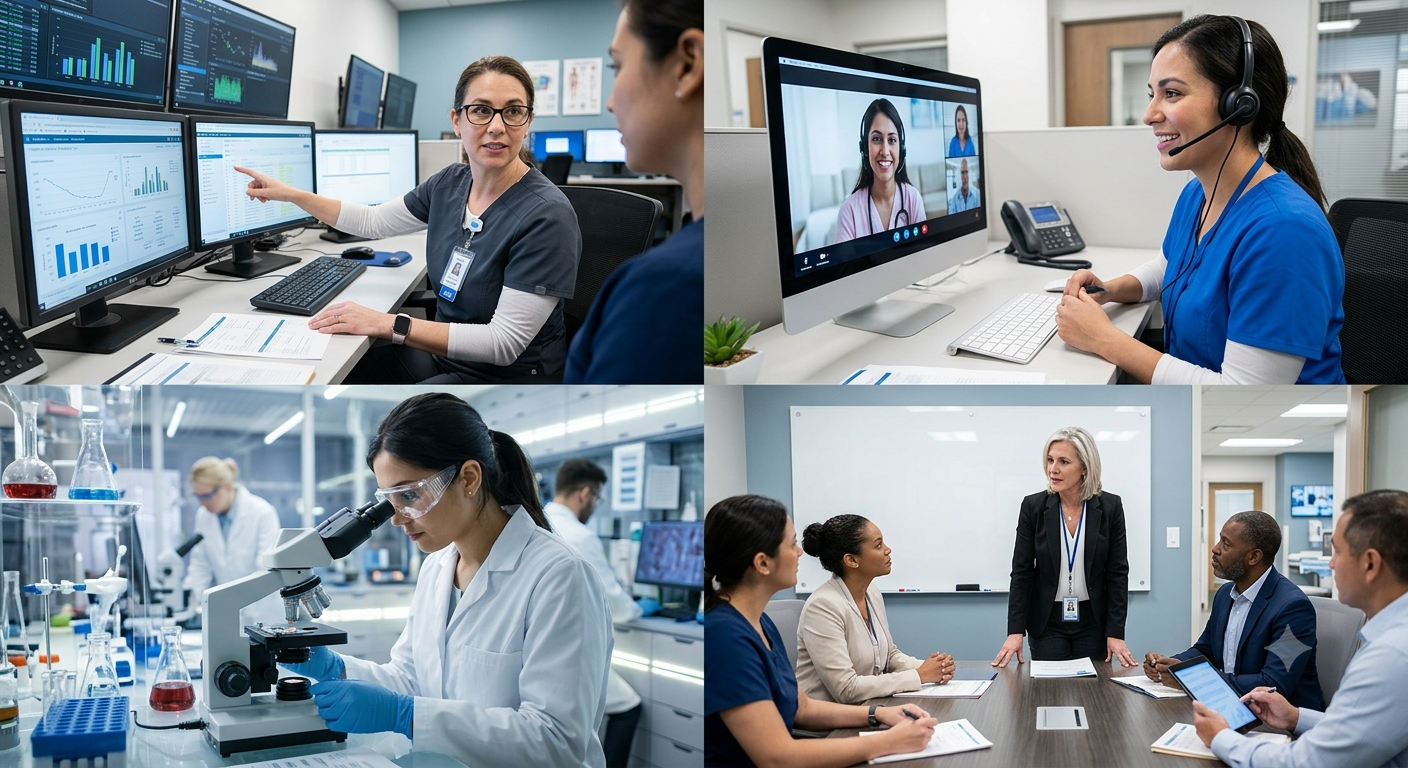
Healthcare careers are not limited to bedside care. Hospitals, clinics, insurers, staffing agencies, public health programs, and digital health companies also depend on people who manage records, schedules, compliance, technology, communication, and daily operations. For professionals who want meaningful work without providing hands-on treatment, non-clinical healthcare jobs offer several practical entry points in 2026.
Some roles are fully on-site, while others may be hybrid or remote. The right option depends on your education, skills, and interest in supporting patients indirectly. This guide explains 15 career paths, the skills employers value, which remote healthcare jobs are realistic, and how to prepare for your next move.
| Non-clinical healthcare jobs support patient care without diagnosing conditions or delivering treatment. Common roles include healthcare administration, patient access, medical billing and coding, health information management, credentialing, compliance, recruiting, data analysis, telehealth coordination, and health communications. |
What Are Non-Clinical Healthcare Jobs?
Non-clinical healthcare jobs are positions within the healthcare sector that do not involve direct diagnosis, treatment, or hands-on clinical care. These professionals keep healthcare organizations organized, compliant, financially stable, properly staffed, and easier for patients to navigate.
The category includes healthcare admin jobs, health data roles, staffing and quality positions, and communication work. These professionals contribute to coordinated services without practicing medicine or nursing.
Why Consider a Non-Clinical Healthcare Career in 2026?
Healthcare organizations continue to expand their use of electronic records, data reporting, remote services, and workforce systems. BLS projects healthcare occupations overall to grow much faster than average from 2024 to 2034, with about 1.9 million openings per year from growth and replacement needs.
Growth varies by occupation. Medical and health services managers are projected to grow 23 percent from 2024 to 2034, health information technologists and medical registrars 15 percent, and medical records specialists 7 percent. These figures do not guarantee an individual job, but they show why operational and information-focused healthcare skills remain valuable.
- Entry paths range from targeted training to graduate-level leadership roles.
- Transferable skills from customer service, administration, finance, technology, human resources, and communications.
- Potential access to hybrid and remote healthcare jobs, especially in billing, records, recruiting, analytics, and communications.
- Work connected to services for patients and communities.
15 Non-Clinical Healthcare Jobs Worth Exploring
| Role | Typical focus | Common entry path | Remote potential |
|---|---|---|---|
| 1. Patient access representative | Registration, insurance verification, intake | High school diploma; customer service experience | Low to moderate |
| 2. Medical scheduler | Appointments, referrals, provider calendars | Administrative experience; EHR familiarity | Moderate |
| 3. Medical billing specialist | Claims, payments, denials, account follow-up | Certificate helpful; payer knowledge | High |
| 4. Medical records specialist | Coding, records accuracy, data integrity | Certificate or associate degree often preferred | High |
| 5. Health information technologist | Health systems, clinical data, reporting | Associate or bachelor degree | Moderate to high |
| 6. Credentialing specialist | Licenses, certifications, payer enrollment | Administrative experience; compliance skills | High |
| 7. Healthcare recruiter | Sourcing, screening, placements, onboarding | Recruiting or healthcare experience | High |
| 8. Healthcare administrative coordinator | Office workflow, documentation, communication | Diploma or degree varies by employer | Moderate |
| 9. Quality improvement coordinator | Audits, measures, process improvement | Healthcare operations or quality experience | Moderate |
| 10. Healthcare compliance specialist | Policies, audits, training, risk controls | Degree or relevant compliance experience | Moderate to high |
| 11. Healthcare data analyst | Dashboards, trends, operational insights | Analytics skills; degree often preferred | High |
| 12. Clinical research coordinator | Study logistics, records, participant scheduling | Bachelor degree often preferred | Low to moderate |
| 13. Community health worker | Outreach, education, resource navigation | Training varies by state and employer | Low to moderate |
| 14. Telehealth program coordinator | Virtual visit workflow and support | Healthcare administration and technology skills | Moderate to high |
| 15. Medical writer or health content specialist | Educational, regulatory, or marketing content | Writing expertise; health knowledge | High |
1. Patient Access Representative
Patient access representatives register patients, verify insurance, collect forms, and explain basic processes. Strong communication, accuracy, empathy, and privacy awareness are essential. This is a practical entry point for people moving from hospitality, retail, or office support into healthcare.
2. Medical Scheduler
Medical schedulers coordinate appointments, referrals, tests, and provider calendars. They balance urgency, authorization, visit length, and patient availability. Centralized scheduling teams may offer hybrid or remote healthcare jobs for candidates who can use electronic health record and call-center systems accurately.
3. Medical Billing Specialist
Medical billing specialists prepare claims, post payments, investigate denials, and follow account issues. Employers value payer knowledge, coding basics, and revenue-cycle experience. Many billing roles can be remote when workers meet productivity, accuracy, confidentiality, and system-access requirements.
4. Medical Records Specialist
Medical records specialists organize, code, review, and protect patient information. They may assign standardized codes, process authorized requests, and maintain data quality. BLS projects 7 percent employment growth from 2024 to 2034. Certification can improve competitiveness for coding-focused positions.
5. Health Information Technologist or Medical Registrar
These professionals support computerized healthcare systems, registries, clinical data quality, and reporting. BLS projects 15 percent growth from 2024 to 2034. The role suits candidates who enjoy technology, structured data, and healthcare operations.
6. Credentialing Specialist
Credentialing specialists verify licenses, education, certifications, work history, and other required documents. They may also support payer enrollment and recredentialing. Digital verification workflows make credentialing one of the more realistic remote healthcare jobs.
7. Healthcare Recruiter
Healthcare recruiters source candidates, conduct screenings, coordinate interviews, collect documentation, and support onboarding. Staffing experience helps, but professionals from sales, customer service, or human resources can transition by learning healthcare roles and credential requirements.
8. Healthcare Administrative Coordinator
Administrative coordinators manage calendars, correspondence, reports, meetings, purchasing, and workflow tracking. These healthcare admin jobs vary by employer. A clinic may need a generalist, while a hospital department may require experience with specialized systems.
9. Quality Improvement Coordinator
Quality improvement coordinators track measures, prepare audits, support improvement projects, and maintain documentation. They do not replace clinical judgment. Their value is giving leaders reliable information and structured processes for improving consistency and patient experience.
10. Healthcare Compliance Specialist
Compliance specialists support policies, audits, training records, incident tracking, and risk reviews. Requirements differ by setting. Employers value careful interpretation, clear communication, confidentiality, and complete documentation.
11. Healthcare Data Analyst
Healthcare data analysts build reports from operational, financial, claims, workforce, or patient-service data. Common tools include spreadsheets, SQL, and business intelligence platforms. Many roles are remote, but analysts must understand data governance and explain limitations honestly.
12. Clinical Research Coordinator
Clinical research coordinators manage study logistics, visits, records, and required activities under approved protocols. The role may involve participant interaction, but is not the same as delivering treatment. Many employers prefer a bachelor’s degree and research-process knowledge.
13. Community Health Worker
Community health workers provide outreach, education, service navigation, and links to local resources. Training rules vary. The role suits candidates with strong communication, community knowledge, and the ability to explain information in a culturally appropriate way.
14. Telehealth Program Coordinator
Telehealth coordinators support virtual visit scheduling, patient access, basic troubleshooting, workflow monitoring, and escalation. Employers need professionals who combine patient service, technology confidence, privacy awareness, and calm problem-solving.
15. Medical Writer or Health Content Specialist
Medical writers create educational materials, reports, website copy, and professional content. These are often remote healthcare jobs. Strong candidates use reliable sources, avoid unsupported medical claims, and adapt complex information for the intended audience.
Which Non-Clinical Roles Are Most Likely to Be Remote?
Remote work is more common when duties are digital and can be performed securely. Billing, coding, credentialing, recruiting, analytics, and health writing frequently appear among remote healthcare jobs. Scheduling, telehealth coordination, quality, and compliance may be remote or hybrid.
Remote roles still require a private workspace, secure equipment, confidentiality, and reliable availability. Avoid advertisements that promise unrealistic pay, request money, use personal email accounts, or skip a formal interview.
How to Choose the Right Career Path
- Identify your strongest transferable skills. Customer service supports patient access, analytical ability supports data roles, and organization supports scheduling or credentialing.
- Check the minimum requirements. Some jobs need only relevant experience, while others require certification, an associate degree, or a bachelor’s degree.
- Decide how much patient contact you want. Non-clinical does not always mean no interaction with patients.
- Compare settings because the same title may have different duties in a hospital, agency, insurer, or digital health company.
- Review local licensing or certification rules. Requirements for coding, community health work, research, and compliance-related positions can vary.
Skills Employers Look for in Healthcare Admin Jobs
- Accurate documentation and attention to detail
- Confidential handling of health and employment information
- Comfort with electronic records, scheduling platforms, applicant tracking systems, or reporting tools
- Understanding of role boundaries and when to escalate a clinical or legal question
| Real-world example: A hotel front-desk supervisor may move into patient access by emphasizing scheduling, service recovery, documentation, payment handling, and calm communication. After learning medical terminology and registration workflows, that person may later advance into a lead, trainer, or practice administration role. |
Common Job Search Mistakes to Avoid
- Using one resume for every role instead of matching the listed responsibilities.
- Calling a role remote without confirming the employer’s location, equipment, schedule, and security requirements.
- Overstating knowledge of coding, compliance, or health systems that you have not used.
- Ignoring temporary, contract, per diem, or temp-to-hire roles that can provide relevant experience.
- Searching only by title instead of related departments such as access, revenue cycle, quality, workforce, or health information.
How EmpowerCare Can Support Your Search
A healthcare staffing partner can explain opportunities, employment models, documentation requirements, and facility expectations. EmpowerCare connects professionals with flexible and permanent roles. Candidates should review qualifications, location, schedule, and responsibilities before accepting a position.
Conclusion: Build a Healthcare Career Beyond the Bedside
The best non-clinical healthcare jobs combine your existing strengths with a clear understanding of how healthcare organizations operate. Whether you are interested in healthcare admin jobs, health information, recruiting, compliance, analytics, or remote healthcare jobs, start by choosing one target path and building evidence that you can perform its core responsibilities. A focused resume, relevant training, and realistic expectations can help you move into a role that supports both your career and the delivery of healthcare services.
Frequently Asked Questions
What are non-clinical healthcare jobs?
They are healthcare-sector roles that support operations, information, finance, staffing, compliance, technology, communication, or patient access without diagnosing or treating patients.
Can I work in healthcare without a medical degree?
Yes. Many patient access, scheduling, billing, recruiting, administrative, writing, and support roles do not require a medical degree. Employers may still require specific experience, training, or certification.
Which non-clinical healthcare jobs can be remote?
Billing, coding, credentialing, recruiting, analytics, compliance support, telehealth coordination, and health writing are among the roles most likely to offer remote or hybrid arrangements.
Are healthcare admin jobs entry-level?
Some are. Patient access, scheduling, records support, and administrative assistant roles may accept transferable office or customer-service experience. Management positions usually require more education and healthcare experience.
Do non-clinical workers interact with patients?
Many do. Patient access representatives, schedulers, community health workers, and telehealth coordinators may communicate with patients regularly, even though they do not provide clinical treatment.
Is medical coding a good career in 2026?
Medical coding remains an established healthcare information function. BLS projects medical records specialist employment to grow 7 percent from 2024 to 2034, although hiring requirements and technology use vary by employer.
What skills transfer well into non-clinical healthcare?
Customer service, administration, data analysis, writing, recruiting, project coordination, finance, technology support, and compliance documentation can all transfer when paired with healthcare-specific knowledge.
How can I avoid remote healthcare job scams?
Verify the employer, use official career pages, expect a professional interview, never pay for a job, and be cautious when recruiters use personal email addresses or request sensitive information too early.
Should I use a healthcare staffing agency?
A reputable staffing agency can provide access to temporary, contract, per diem, temp-to-hire, and permanent roles. Review the assignment terms, job duties, pay structure, location, and credential requirements before accepting.