

The Benefits of Transitioning Into Non-Clinical Healthcare Careers

Non-Clinical Healthcare Jobs

Healthcare is often associated with bedside care, emergency rooms, operating theatres, and direct patient interaction. While these roles remain the heart of the industry, they represent only one part of a much larger healthcare ecosystem. Behind every successful hospital, clinic, rehabilitation centre, or home healthcare provider is a team of skilled professionals working in administrative, operational, financial, technological, and support roles that keep healthcare running efficiently. As a result, many healthcare professionals are discovering they can continue to make a meaningful impact without providing direct patient care. Whether motivated by career growth, work-life balance, changing personal priorities, or a desire to use their experience in new ways, more professionals are exploring non-clinical healthcare jobs than ever before. For healthcare organisations, this shift presents an opportunity to strengthen operations by bringing experienced healthcare professionals into essential administrative and support positions. For employees, it opens the door to rewarding careers that continue to improve patient outcomes while offering greater flexibility and new professional challenges. Whether you’re considering a career transition or you’re an employer looking to build stronger healthcare teams, understanding the value of non-clinical careers can help you make informed decisions. In this guide, we’ll understand the benefits of transitioning into non-clinical healthcare roles, why demand is growing, and how Empower Care helps both employers and job seekers succeed. 

Healthcare Is More Than Bedside Care 

When people think about healthcare careers, they often picture physicians, nurses, and therapists providing hands-on patient care. However, healthcare organisations rely on thousands of professionals working behind the scenes to ensure every patient receives safe, efficient, and high-quality care. These professionals support areas such as: 

  • Healthcare administration 
  • Medical scheduling 
  • Patient coordination 
  • Revenue cycle management 
  • Medical billing and coding 
  • Human resources 
  • Compliance 
  • Healthcare technology 
  • Quality assurance 
  • Care coordination 
  • Case management 
  • Recruitment 

Without these roles, clinical teams would struggle to focus on patient care, which highlights why these support functions matter. 

Why More Professionals Are Exploring Non-Clinical Healthcare Jobs 

Healthcare careers evolve just as people’s lives do. After years of working in physically demanding clinical environments, many professionals begin looking for new ways to apply their expertise. Others simply discover strengths in communication, leadership, organisation, or operations. As interest in non-clinical healthcare jobs grows, several workplace trends are driving the shift. Professionals increasingly value: 

  • Career flexibility 
  • Work-life balance 
  • Reduced physical demands 
  • Professional growth 
  • Leadership opportunities 
  • Long-term career sustainability 

Transitioning into a non-clinical role doesn’t mean leaving healthcare behind; it often means contributing in a different, equally valuable way. 

 Common Non-Clinical Healthcare Career Paths 

Healthcare organisations offer diverse opportunities beyond direct patient care. Building on that range, some of the fastest-growing positions include: 

  • Healthcare Administration - Professionals in healthcare admin jobs help manage daily operations, coordinate departments, improve efficiency, and support organisational goals. Strong administrative teams allow clinicians to spend more time focusing on patients rather than paperwork. 
  • Care Coordination - Care coordinators help patients navigate appointments, referrals, treatments, and follow-up care. Their work improves communication between providers while enhancing patient experiences. 
  • Healthcare Recruitment - Healthcare recruiters help connect organisations with qualified professionals. Their efforts directly influence staffing quality, employee retention, and patient care outcomes. 
  • Compliance and Quality Improvement - Healthcare organisations rely on professionals who monitor regulations, accreditation requirements, and patient safety initiatives. These positions help organisations maintain high standards across every department. 
  • Healthcare Technology - Technology continues transforming healthcare delivery. Professionals with clinical knowledge often transition into healthcare IT, electronic medical records support, data analysis, and digital health solutions. 

 The Rise of Remote Healthcare Jobs 

Technology has expanded opportunities for professionals seeking greater flexibility. Many remote healthcare jobs now allow experienced healthcare workers to contribute from virtually anywhere in roles such as patient scheduling, medical coding, billing support, telehealth coordination, and administrative support. Remote opportunities may include: 

  • Patient scheduling 
  • Medical coding 
  • Billing support 
  • Telehealth coordination 
  • Healthcare recruiting 
  • Case management 
  • Medical documentation 
  • Utilization review 
  • Patient advocacy 
  • Administrative support 

These roles enable professionals to remain active in healthcare while achieving greater work-life balance, reinforcing the value of remote opportunities. 

 Why Transitioning Can Be the Right Career Move 

Changing careers can feel intimidating. Still, many healthcare professionals discover that non-clinical roles allow them to continue making meaningful contributions while improving their quality of life. 

  • Better Work-Life Balance - Administrative and remote positions often provide more predictable schedules than rotating clinical shifts. This creates greater flexibility for family responsibilities, continuing education, or personal interests. 
  • Reduced Physical Demands - Clinical care can be physically demanding. Professionals experiencing fatigue, injuries, or changing personal priorities often appreciate careers that reduce physical strain while preserving their healthcare expertise. 
  • Continued Professional Growth - Transitioning doesn’t mean slowing down. Many administrative careers provide opportunities for: 
  • Leadership 
  • Project management 
  • Operations 
  • Strategic planning 
  • Organizational development 

These experiences can lead to executive leadership positions. 

  • Using Existing Healthcare Knowledge - Professionals don’t leave their experience behind. Instead, they apply clinical understanding in new ways that improve organisational performance and patient outcomes. 

 Why Hiring Experienced Healthcare Professionals Matters 

Healthcare organisations increasingly recognise the value of hiring professionals with clinical backgrounds into administrative positions. Their first-hand experience strengthens decision-making throughout the organisation. 

  • Improved Communication Between Departments - Professionals who understand clinical workflows communicate more effectively with healthcare teams. This improves collaboration across departments. 
  • Better Operational Decisions - Individuals with direct patient care experience often recognise operational challenges that others might overlook. Their insights contribute to smarter organisational improvements. 
  • Stronger Patient-Centred Culture - Professionals transitioning from clinical roles maintain a patient-first mindset. Even in administrative positions, they continue advocating for quality care. 
  • Workforce Retention - Organisations that offer career mobility encourage experienced employees to remain within the healthcare system rather than leave the profession entirely. This protects valuable institutional knowledge while strengthening workforce stability. 
  • Skills That Transfer Successfully - Many healthcare professionals underestimate how valuable their existing skills already are. Clinical experience develops competencies that transfer seamlessly into administrative careers. These include: 
  • Communication 
  • Leadership 
  • Critical thinking 
  • Time management 
  • Organization 
  • Documentation 
  • Problem-solving 
  • Teamwork 
  • Emotional intelligence 
  • Patient advocacy 

These qualities remain highly valuable regardless of specific job titles. 

 Challenges to Expect During the Transition 

Like any career change, transitioning into non-clinical roles requires preparation. To make the move successfully, professionals may need to: 

  • Learn new software 
  • Develop administrative knowledge 
  • Strengthen project management skills. 
  • Adapt to different workplace structures. 
  • Build new professional networks. 

Fortunately, healthcare experience provides a strong foundation for success. 

 Why Choosing the Right Opportunity Matters 

Not every administrative role will align with your goals. With that in mind, consider: 

  • Organizational culture 
  • Leadership support 
  • Career advancement 
  • Training opportunities 
  • Work flexibility 
  • Professional development 
  • Long-term growth potential 

Finding the right fit contributes to greater career satisfaction. 

 Final Thoughts 

Transitioning into non-clinical healthcare jobs isn’t about leaving patient care behind; it’s about supporting it in new and impactful ways. Whether through healthcare admin jobs, operational leadership, care coordination, recruitment, or remote healthcare roles, professionals continue to improve healthcare outcomes while building rewarding, sustainable careers. For employers, hiring experienced healthcare professionals into administrative roles strengthens communication, improves operational efficiency, and supports long-term workforce development. For employees, these opportunities offer career flexibility, work-life balance, leadership potential, and the chance to continue making a meaningful difference without the physical demands of bedside care. The key to a successful transition is finding the right opportunity with the right guidance. At Empower Care, we’re proud to connect healthcare organisations with talented professionals and help individuals build fulfilling careers across every area of healthcare. Whether you’re hiring skilled administrative talent or exploring your next career move, Empower Care is your trusted partner in creating stronger teams, meaningful careers, and better healthcare outcomes. 
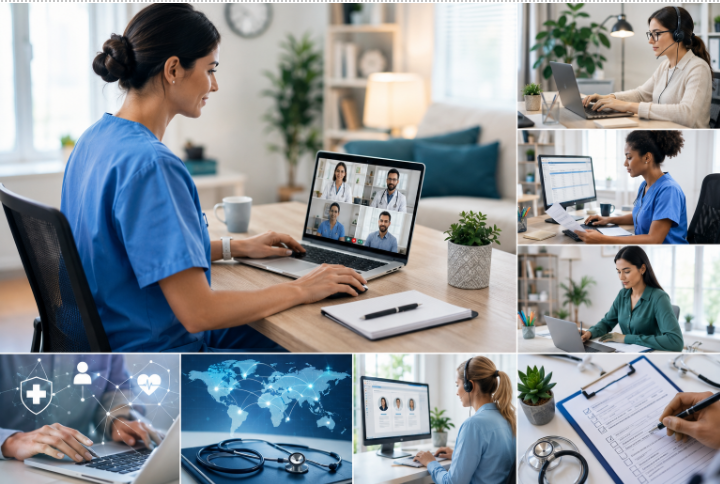
 

Remote Healthcare Jobs Beyond Bedside Care: Admin Career Paths 

Empowercare staffing

After COVID – 19, we have seen the shift in the norm, the new norm was to work remotely or work from home, but for the healthcare industry, it was the opposite, probably working away from loved ones to keep them safe from the disease. When most people think of healthcare professionals, they picture nurses in hospital units, physicians in clinics, or caregivers assisting patients at the bedside. While these roles remain essential, the healthcare industry is evolving rapidly. Advances in technology, telehealth services, digital health records, and remote workforce solutions have created an entirely new category of opportunities: remote healthcare jobs. Today, healthcare professionals can build meaningful, rewarding careers without spending every shift in a hospital room or clinical setting. In fact, many experienced nurses, healthcare workers, and administrative professionals are discovering exciting opportunities in healthcare administration, care coordination, medical operations, recruitment, compliance, insurance services, and patient support, all from the comfort of home. Let’s explore how remote healthcare careers are transforming the industry, the growing demand for non-bedside nursing jobs and healthcare admin jobs, and how Empower Care helps both employers and professionals navigate this exciting landscape. 

 The Rise of Remote Healthcare Jobs 

The healthcare industry has experienced significant changes over the last decade. Digital transformation, electronic health records, virtual consultations, remote patient monitoring, and cloud-based healthcare systems have enabled many healthcare functions to be performed outside traditional clinical environments. What was once considered impossible is now commonplace. Healthcare organizations increasingly rely on remote professionals to support operations, manage patient communications, coordinate care, process claims, maintain compliance, and improve administrative efficiency. As a result, remote healthcare jobs have become one of the fastest-growing segments within the healthcare workforce. These opportunities allow organisations to access skilled professionals regardless of geographic location, while giving employees greater flexibility in how they work. 

 Why More Healthcare Professionals Are Looking Beyond Bedside Care 

For many healthcare workers, direct patient care is deeply rewarding. However, it can also be physically demanding, emotionally challenging, and difficult to sustain over long periods. Many professionals eventually begin asking themselves: 

  • Can I continue working in healthcare without providing direct patient care? 
  • Are there opportunities to use my experience differently? 
  • Can I achieve a better work-life balance while remaining in the healthcare industry? 

The answer is increasingly yes. 

The demand for non-bedside nursing jobs and healthcare administrative roles continues to grow as organizations seek professionals who understand healthcare systems but can contribute in non-clinical capacities. These roles allow experienced healthcare professionals to leverage their knowledge while exploring new career paths. 

 What Are Non-Bedside Nursing Jobs? 

The phrase ” non-bedside nursing jobs refers to nursing-related roles that do not involve direct patient care in hospitals, clinics, or long-term care facilities. 

These positions often focus on administration, education, coordination, quality improvement, compliance, technology, or patient support. 

Examples include: 

  • Nurse case manager 
  • Utilization review nurse 
  • Clinical documentation specialist 
  • Healthcare recruiter 
  • Patient care coordinator 
  • Telehealth coordinator 
  • Quality assurance specialist 
  • Healthcare consultant 
  • Nurse educator 
  • Medical records reviewer 

Many of these positions can be performed remotely or through hybrid work arrangements. For nurses seeking a career transition, these roles offer an opportunity to continue making a difference without the physical demands associated with bedside care. 

 The Expanding World of Healthcare Admin Jobs 

Healthcare organizations depend on far more than doctors and nurses. 

Behind every successful healthcare facility is a team of professionals responsible for keeping operations running smoothly. This is where healthcare admin jobs play a critical role. Administrative professionals support everything from patient scheduling and billing to compliance, staffing, human resources, and operational management. 

Common healthcare administration roles include: 

  • Patient Services Coordinator 

These professionals manage patient communications, appointment scheduling, referrals, and service coordination. 

  • Medical Billing and Coding Specialist 

Billing professionals help ensure accurate insurance claims processing and reimbursement management. 

  • Healthcare Recruiter 

Recruiters help healthcare organisations attract and retain qualified talent in a competitive workforce. 

  • Compliance Coordinator 

Healthcare compliance professionals ensure organizations adhere to regulatory requirements and industry standards. 

  • Care Coordinator 

Care coordinators help patients navigate treatment plans, appointments, insurance requirements, and follow-up care. 

  • Human Resources Specialist 

Healthcare HR professionals support recruitment, employee relations, onboarding, and workforce development. Many of these positions are increasingly available through remote and hybrid work models. 

 Why Employers Are Investing in Remote Healthcare Teams 

Healthcare organizations are facing ongoing workforce challenges. 

Labour shortages, rising operational costs, employee burnout, and increasing patient demand have forced leaders to rethink traditional staffing models. Remote healthcare teams offer several significant advantages. 

  •  Access to a Larger Talent Pool – When organizations remove geographic limitations, they can recruit qualified professionals from a much broader candidate base. This improves hiring outcomes and reduces recruitment challenges. 
  • Increased Employee Retention – Flexible work arrangements are increasingly important to today’s workforce. Organisations that offer remote opportunities often experience higher employee satisfaction and stronger retention. 
  • Improved Operational Efficiency – Many administrative functions can be performed effectively from remote environments. This allows healthcare organizations to streamline operations while maintaining service quality. 
  • Cost Savings – Remote staffing models can reduce overhead costs for office space, equipment, and facility management. These savings can often be reinvested into patient care and workforce development initiatives. 


Why Remote Healthcare Careers Are So Attractive 

Remote work has transformed expectations across nearly every industry, and healthcare is no exception. Professionals are increasingly prioritizing flexibility, autonomy, and work-life balance when evaluating career opportunities. 

  • Better Work-Life Balance 

Long commutes, rotating shifts, and demanding schedules can contribute to burnout. Remote healthcare jobs often provide more predictable schedules and greater flexibility. 

  • Career Longevity 

Many experienced nurses and healthcare professionals leave bedside care because of physical strain. Remote and administrative positions allow these individuals to continue contributing their expertise while reducing physical demands. 

  • Diverse Career Opportunities 

Healthcare administration offers numerous specialization paths, including operations, compliance, human resources, technology, quality improvement, and patient services. This variety allows professionals to align their careers with their interests and strengths. 

  • Geographic Freedom 

Remote roles often eliminate the need to relocate for career advancement. Professionals can access opportunities with organizations across the country while remaining in their preferred location. 

  • Skills That Employers Are Looking For 

While technical qualifications remain important, employers hiring for remote healthcare jobs often prioritize additional skills. 

  • Communication 

Remote teams depend heavily on clear and effective communication. 

Strong verbal and written communication skills are essential. 

  • Organization 

Administrative professionals frequently manage multiple responsibilities simultaneously. Time management and organizational abilities are highly valued. 

  • Technology Proficiency 

Comfort with electronic health records, scheduling systems, video conferencing platforms, and healthcare software is increasingly important. 

  • Problem-Solving 

Healthcare environments are dynamic. Professionals who can identify challenges and implement effective solutions contribute significant value. 

  • Healthcare Knowledge 

For many healthcare administration jobs, prior experience in healthcare settings provides a strong advantage. Understanding patient care processes and healthcare operations helps professionals succeed in administrative roles. 

Common Misconceptions About Non-Clinical Healthcare Careers 

Many healthcare professionals mistakenly believe that moving into a non-clinical role means leaving patient impact behind. Nothing could be further from the truth. Administrative and operational professionals play a critical role in healthcare outcomes. A care coordinator ensures patients receive timely services. A recruiter helps facilities maintain adequate staffing levels. A compliance specialist protects patient safety by ensuring regulatory compliance. A patient services coordinator improves access to care. These roles may not involve direct bedside interactions, but they contribute significantly to the overall patient experience. 

 Why the Future of Healthcare Includes More Remote Opportunities 

Healthcare leaders increasingly recognize that flexibility is not merely a workplace perk; it’s a strategic advantage. 

Organisations that embrace remote staffing models can: 

  • Attract top talent 
  • Improve retention 
  • Enhance operational efficiency 
  • Increase workforce resilience 
  • Reduce recruitment challenges 

As healthcare technology continues to evolve, the number of remote healthcare jobs is expected to expand even further. Professionals who develop administrative, operational, and digital healthcare skills will be well-positioned for future opportunities. 

 Final Thoughts 

The healthcare industry is no longer defined solely by bedside care. Technology, workforce innovation, and changing employee expectations have created a growing demand for remote healthcare jobs that support patients and organizations from behind the scenes. For healthcare professionals, opportunities in non-bedside nursing jobs and healthcare administration roles offer flexibility, career growth, and new ways to make a meaningful impact. For employers, remote staffing solutions provide access to skilled talent, improved retention, and enhanced operational efficiency. As the healthcare workforce continues to evolve, organizations and professionals who embrace these opportunities will be better positioned for success. With a trusted partner like Empower Care, healthcare employers can build stronger teams, and healthcare professionals can discover rewarding career paths that extend far beyond the bedside.