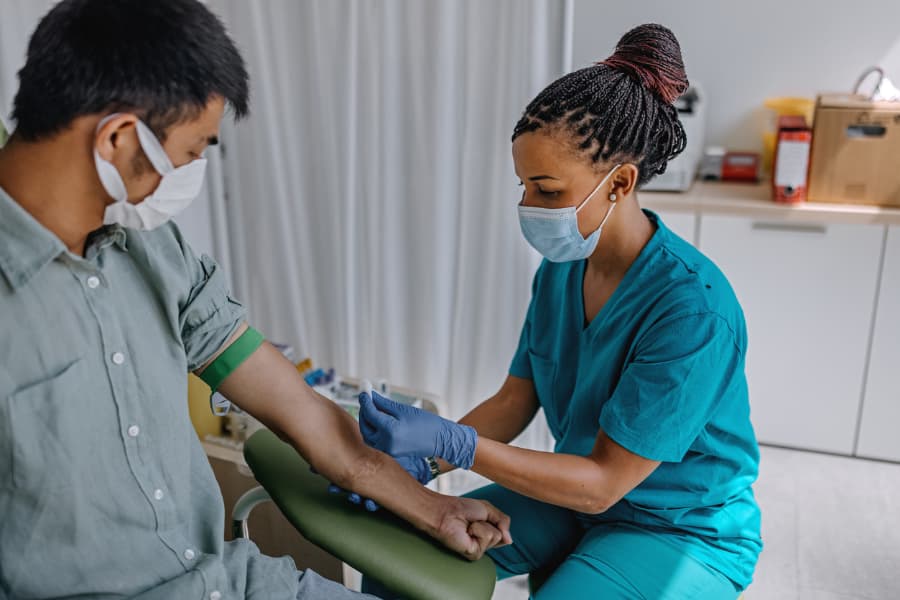
When discussing the healthcare industry, our vision is often limited to doctors and nurses, and typically extends to the staff supporting them in clinics and hospitals. We do not go beyond them, but when it comes to labs and their staff, we often think about the specialist staff who are actually testing the samples. What about the travel phlebotomist? Now, if you are a young individual who enjoys working alone, travelling to multiple locations in a day, and connecting with patients directly, not as a doctor or nurse, but as someone who collects samples, then this blog is for you. This blog will dig deeper into the roles, responsibilities, requirements, salary and more about the travel phlebotomist. If you are aspiring to be one, then this blog will take you into the details.
What Sets a Travel Phlebotomist Apart?
Before we delve into the details, let’s clarify who we’re referring to. A travel phlebotomist is a trained medical professional who specializes in drawing blood and works in various locations, rather than being tied to a single facility. Their assignments may take them to hospitals, nursing homes, mobile clinics, private residences, and even corporate offices.
Unlike traditional phlebotomists, who work primarily in labs or hospitals, travel phlebotomists bring a dynamic and varied work environment to healthcare. They may be hired by home health agencies, insurance companies, clinical labs, or employers who require health screenings for their staff, taking them to hospitals, nursing homes, mobile clinics, private residences, and even corporate offices.
Responsibilities of a Travel Phlebotomist
Yes, their primary role is to draw blood samples, but let’s understand it fully. Here is the complete breakdown of their responsibilities as a travel Phlebotomist -
- Blood collection through venepuncture, finger sticks, or heel sticks (for infants).
- Specimen handling, including labelling, processing, and transportation to labs.
- Patient interaction in diverse environments often requires adaptability and communication skills.
- Maintaining safety protocols in spaces that may not be as controlled as a clinical lab.
- Travel coordination, such as planning routes, scheduling patient visits, and ensuring timely sample delivery.
- Medical screenings like cholesterol checks, glucose monitoring, or other wellness services (depending on the assignment).
Because travel phlebotomists often work independently, they must also be skilled at problem-solving and time management.
Requirements to Become a Travel Phlebotomist
If taking on the role of Travel Phlebotomist is exciting for you, then consider the qualification or certification requirements. Here is the breakdown of the requirements that one must fulfil to take on this role.
Education & Training
- A high school diploma or GED is required.
- Completion of a phlebotomy training program accredited by a recognized institution.
- Certification (varies by state and employer) from organizations such as:
- American Society for Clinical Pathology (ASCP)
- National Phlebotomy Association (NPA)
- National Health career Association (NHA)
Skills Needed
- Strong technical skills in venepuncture.
- Excellent interpersonal communication.
- Comfortable working in varied environments.
- Ability to manage travel logistics and scheduling.
- Attention to detail in specimen handling and labelling.
Other Requirements
- A valid driver’s license and reliable transportation.
- Flexibility in working hours (some assignments may require evenings or weekends).
- Physical stamina for travel and carrying equipment.
Why Travel Phlebotomy Is in Demand
One must consider what the future of the role I’m choosing will be, and what if it becomes obsolete, then what will happen? However, when it comes to Travel Phlebotomy, the requirement for these specialists is actually the opposite; the demand is high. Here’s why -
- An ageing population needing in-home Care.
- Chronic disease management often requires frequent laboratory tests.
- Insurance companies and employers are investing in preventive health screenings.
- Telehealth integration, where at-home blood draws complement virtual Care, is a key component of this approach.
- Post-COVID healthcare models emphasizing in-home and mobile services.
Salary of a Travel Phlebotomist
Now, many factors are involved when discussing the salary of a Travel Phlebotomist. The factors include your level of experience in the field, the location of the job you will be handling, the frequency of regular travel, your employer, whether it is a hospital, lab, or insurance company, and more. Some travel phlebotomists choose to work independently, setting their own rates and client base, which can significantly increase earning potential. However, many travel phlebotomists are paid on an hourly or per-assignment basis. Hourly rates often range from (PLEASE ASK THE CLIENT), with additional compensation for travel time or mileage reimbursement. Therefore, the salary for a travel phlebotomist can vary widely based on experience, location, and the type of employer. On average, salaries range between (PLEASE ASK THE CLIENT).
Benefits of Being a Travel Phlebotomist
For healthcare workers, travel phlebotomy offers unique benefits that traditional roles may not:
- Flexibility – Choose assignments and locations that fit your schedule.
- Variety – Work in different environments instead of a single lab or hospital.
- Independence – Manage your own routes and patient interactions.
- Patient Impact – Provide personalized Care to individuals who may not have easy access to healthcare clinics.
- Career growth – Opportunities to expand into supervisory roles, private contracting, or related healthcare services.
Challenges of Travel Phlebotomy
Of course, no career path is without its challenges. Travel phlebotomists must navigate:
- Unpredictable environments – Homes and workplaces may lack the clinical setup of a lab.
- Time management – Balancing multiple appointments and travel routes.
- Isolation – Working independently without the support of a hospital team.
- Strict safety requirements – Ensuring infection control outside clinical settings.
How can EmpowerCare be your partner?
As an online employment Agency, our mission is to connect skilled professionals with the opportunities that best match their expertise, preferences, and lifestyle. Whether you’re seeking short-term assignments or long-term roles, we help tailor opportunities to your needs. We connect certified phlebotomists with employers, agencies, and organizations that need mobile services. We provide resources, guidance, and employer connections to help you thrive in this growing field. For employers, we offer a platform to find qualified and reliable mobile healthcare professionals, saving you time and resources in the hiring process.
Final Thought
The role of a travel phlebotomist is not just a job, but a reflection of the future of healthcare—flexible, mobile, and patient-centred. With strong demand, competitive pay, and opportunities for independence, it’s an excellent career path for healthcare professionals who want more than the traditional lab environment. At the same time, patients and employers benefit from services that bring healthcare directly to their doors. Are you a travel phlebotomist seeking your next opportunity—or an employer looking for reliable mobile healthcare professionals? Connect with EmpowerCare today and let us help you take the next step.